Phuket Community guide
Moving to Phuket
A working resident's guide to the island
By Phuket Community · Updated August 2026
Take it with you
Save this guide as a PDF
Enter your email and we'll send a copy you can read offline or share with the person planning the trip.
Free · one email · unsubscribe anytime.
Neighbourhoods
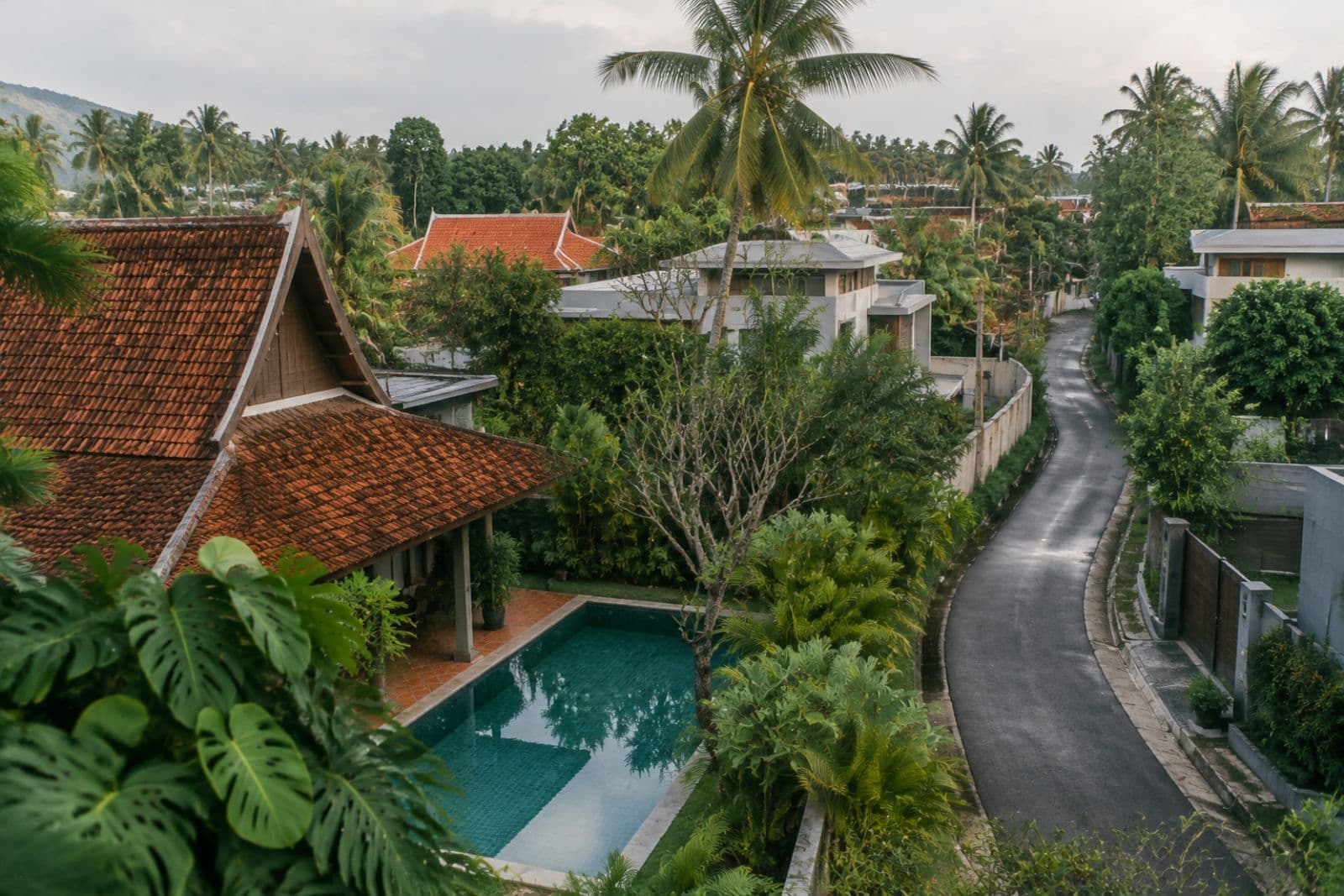
Where you live on Phuket shapes your daily life more than almost any other decision you’ll make on the island. Phuket is bigger than most newcomers expect — the drive from the southern tip to the northern airport is 45 minutes without traffic, and an hour or more with it. Which beach you can walk to, how long your school run takes, whether your gym is 10 minutes away or 30, which shops you pass on the way home — all of it comes down to neighbourhood.
Most residents move at least once in their first year before settling. That’s not a failure of planning, it’s a normal part of finding the right fit — and the rental market accommodates it. Six- and twelve-month leases are common, and month-by-month arrangements are possible in most areas. Trying a neighbourhood for a season before committing longer-term is a sensible approach, not a compromise.
What follows is a working guide to the main expat areas of Phuket, framed around which type of resident tends to fit where rather than a ranking of best to worst. No area is wrong. Different fits for different people, at different life stages, with different priorities. The trade-offs are what matter.
The island’s expat clusters group roughly into three zones. The south — Rawai, Nai Harn, Chalong, Kata — has the largest established resident community and the fitness and family-life infrastructure that comes with it. The west coast — Kamala, Surin, Bang Tao and Cherng Talay, plus Patong — is where the luxury villa market and the international schools sit. Phuket Old Town, on the east side, is the island’s cultural and urban centre. The airport is far north; the main international schools sit north-central.
Rawai
The largest established expat family community on the island. Rawai has a settled, long-term feel — families with school-age children, retirees, small business owners, long-stay Muay Thai and fitness trainers. Nationalities mix broadly: British, European, Australian, Russian, and a growing Chinese community. The area is properly residential — walk-in dining, everyday errands, local markets, and services all within a small radius. Beach access is via Rawai’s seawall promenade (which is more social and seafood-restaurant strip than swimming beach), or a five-minute drive to Nai Harn or Ya Nui. The airport is 40 to 45 minutes north. Traffic within Rawai itself is manageable. One-bed condo rentals start from about ฿15,000 per month; family villas with pools run from about ฿35,000 to ฿80,000 depending on size and area.
Nai Harn
Just west of Rawai, quieter and greener. A similar mix of family and long-term expat residents, skewing slightly older or higher-end in parts. The beach is the main draw — Nai Harn Beach is one of the most swimmable on the island, with a lake behind it that gives the area a distinct feel. Fewer everyday amenities than Rawai and Chalong, so most residents drive to Rawai for shopping and services. Rents pattern with Rawai; the top end for villas runs higher.
Kata
More tourist-adjacent than Rawai or Nai Harn. A large share of the rental stock is designed for holiday lets, which distorts the long-term market and can make finding a settled year-long rental harder. Some expats live here happily — mostly younger, beach-oriented, working in flexible or remote roles — but the rhythm of the area shifts noticeably in high season. Kata and Karon beaches are the main appeal. The distance to the international schools north makes it a harder fit for school-age families. Long-term rents start from about ฿20,000 per month for a decent condo.
Chalong
The heart of the island’s fitness scene — Muay Thai camps, CrossFit boxes, strength gyms — and the departure point for boat trips from Chalong Pier. Chalong has a more genuinely Thai feel than the more expat-dense neighbourhoods, with a growing expat presence rather than a dominating one. It’s centrally positioned in the south: ten minutes to Rawai, five to Nai Harn, ten to Kata. Airport is 40 minutes. Rents run slightly lower than Rawai. Popular with fighters, gym-committed residents, and people who want a less-expat-bubble experience without giving up proximity to the resident amenities.
Bang Tao and Cherng Talay
The luxury and international zone. The Laguna resort complex sits at the centre; the main British-curriculum international schools are within a short drive. Bang Tao Beach is one of the longest on the island. Traffic on the main junctions can get heavy in high season. The area draws families with children in the international schools, higher-earning professionals, and second-home owners — a noticeably different demographic to Rawai in the south. Airport is 20 to 25 minutes. One-bed condos start from about ฿20,000 per month; villas run from about ฿60,000 up to ฿200,000 or more, depending on scale and location.
Surin
South of Bang Tao. Upmarket, smaller, villa-heavy. Surin Beach itself is quieter and more residential in feel than the beach-club-busy areas to the north. A smaller expat community than Bang Tao but similar in demographic. Slightly further to the international schools than Bang Tao central. Rents pattern with Bang Tao and often run higher for the beachfront villas.
Kamala
South of Surin. A step down in price and up in demographic mix — Kamala has retained more of a genuine village feel than the neighbourhoods to the north, with solid everyday infrastructure and its own well-regarded beach. Trade-off is that it sits closer to Patong, which brings slightly more transient traffic. Popular with residents who want to be on the west coast without the Bang Tao price point. Rent range is broader here — decent one-bed condos start from about ฿15,000 per month.
Patong
The tourist centre of the island. Some long-term expats do live in and around Patong — usually working in hospitality, entertainment, or specific businesses that keep them tied to the area. For families and for residents seeking a settled home life, Patong is rarely the right fit. Rents can look cheap on paper, but the density, noise, short-let culture and dominant tourism economy make it a difficult choice for anyone without a professional reason to be there.
Phuket Old Town
The island’s cultural and heritage centre. Different vibe entirely from the beach neighbourhoods — Sino-Portuguese shophouses, cafe culture, walkable streets, an increasingly interesting small-business and creative scene. It draws residents who want a more urban, less beach-centred life. Trade-off is the drive: any beach is 20 to 30 minutes away, and daily errands operate on a different rhythm to the west and south coasts. Rents for restored shophouse apartments start from about ฿12,000 per month; family houses on the outskirts run higher.
Healthcare
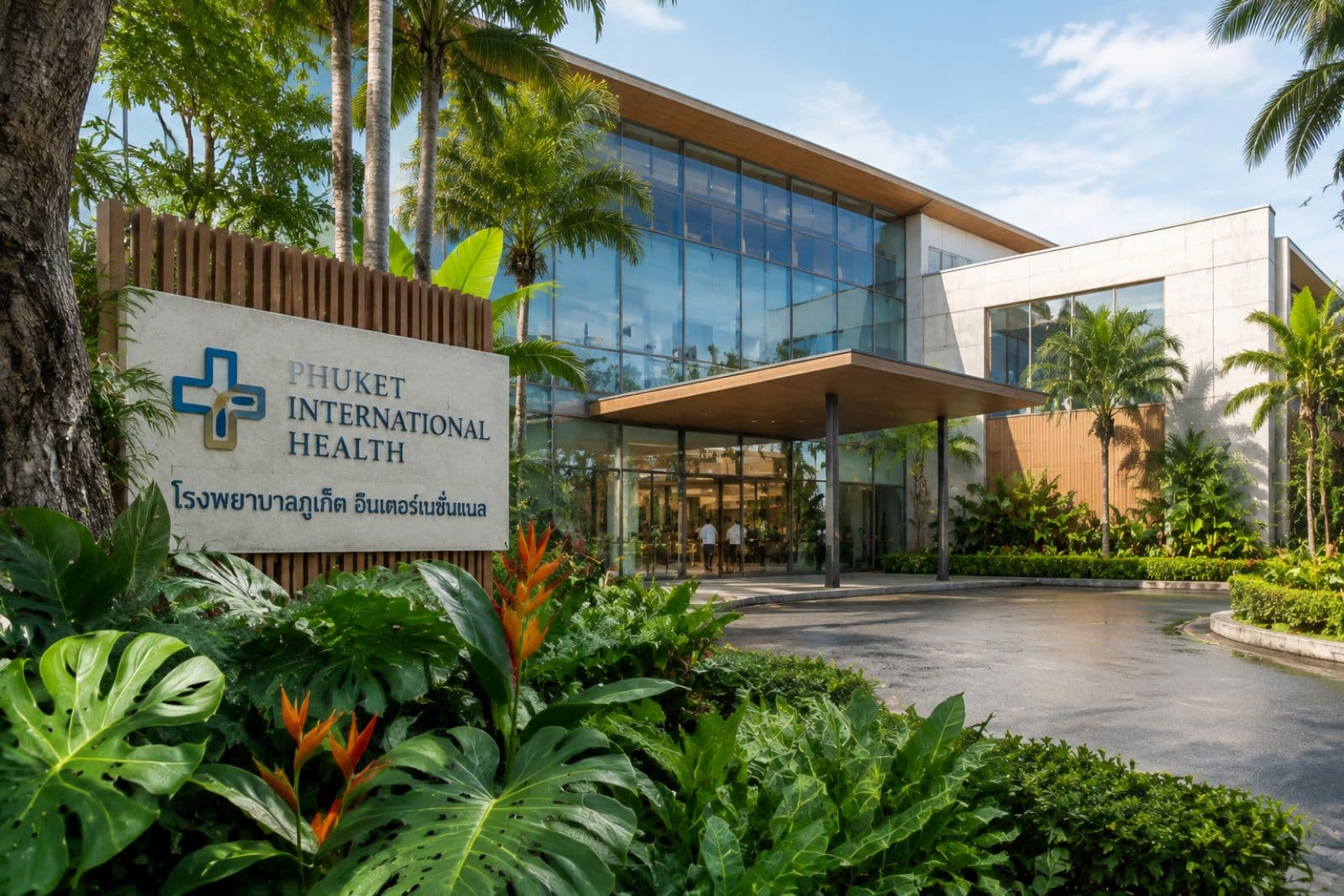
Healthcare is one of the categories most newcomers worry about before arriving on Phuket, and one of the categories most stop worrying about within a month of settling in. The private hospital sector on the island is genuinely good — international standards, English-speaking doctors, and a functioning insurance ecosystem that mostly works the way you’d expect. It is not the anxiety it is often made out to be online.
The two-tier system matters. Public hospitals — primarily Vachira Phuket Hospital — provide low-cost or free care to Thai citizens under universal coverage, and emergency care to foreigners at government rates. Private hospitals — Bangkok Hospital Phuket, Bangkok Hospital Siriroj, Mission Hospital and a few smaller institutions — provide the international-standard care most expats rely on. Both have their place. Most residents use the private system routinely and know where the government hospital is.
This section covers the practical shape of Phuket healthcare: which hospitals expats actually use, what things roughly cost with and without insurance, dental options, whether insurance is worth it, and the emergency numbers you should have saved in your phone before you need them.
The private hospitals
Bangkok Hospital Phuket (BDMS group) is the largest and most established private hospital on the island, in Phuket Town. JCI-accredited. Comprehensive specialised centres including a serious Heart Centre and the Phuket Cancer Institute. Offers an Expatriate Privilege Card that gives long-term residents discounts on room rates, medications and dental care. The default choice for complex conditions, cardiac care, oncology, and anything requiring a specialist.
Bangkok Hospital Siriroj (BDMS group) — formerly known as Phuket International Hospital and Siriroj International Hospital, rebranded in 2019 after joining the BDMS network. Located on the main bypass road, closest to Patong. JCI-accredited. Smaller and more boutique than Bangkok Hospital Phuket, with strong outpatient and same-day diagnostic services. Also home to a well-known plastic and cosmetic surgery centre. Good for walk-in outpatient care, imaging, minor procedures and rapid triage.
Mission Hospital Phuket in Kathu is smaller than the two BDMS facilities but well-regarded within the resident community for general practice, family medicine, and everyday care. Often quicker and less expensive than the larger hospitals for routine consultations.
Dibuk Hospital, part of the BDMS group, is smaller and more specialist-focused — less commonly the first stop but comes up in referral pathways.
The public system
Vachira Phuket Hospital in Phuket Town is the main government hospital and the largest hospital on the island by capacity. Treats Thai residents under universal coverage and provides emergency care to foreigners at government rates. Waiting times are longer than private and English support is limited, but standards are solid. Worth knowing where it is — for major emergencies from certain parts of the island, it may be the closest facility.
Costs, with and without insurance
Private hospital care in Phuket is affordable by Western standards but not cheap by Thai standards. A specialist consultation typically runs ฿1,500-฿3,500 before tests. A routine blood panel or minor imaging is a few thousand more. A day-case surgical procedure — appendicectomy, hernia repair, straightforward gallbladder — runs ฿80,000-฿200,000. Serious admissions (cardiac events, major surgery, ICU stays) can run into millions.
With comprehensive health insurance, most is covered directly — the main private hospitals have insurance liaison desks and process direct-bill claims with major international insurers routinely. Without insurance, you pay upfront and claim back yourself. Card, cash and international transfers are all accepted for larger bills.
Everyday care usually gets paid out of pocket even by insured residents, because deductibles typically exceed the cost of a GP visit. A private clinic GP consultation runs ฿800-฿1,500. A routine blood test panel is ฿1,500-฿3,500. Rapid antigen and flu tests are a few hundred each.
Is insurance worth it?
Yes. Uncontroversial view among settled residents. A single serious admission without insurance can wipe out years of premium payments in one bill — and while private care is affordable compared to the US, it is not affordable at that price if you are the one paying.
Three levels are common:
Local Thai insurers (AIA, Muang Thai, Bupa Thailand) — cheaper premiums, coverage limited to Thailand, works well for residents planning to stay.
International expat plans (Cigna Global, Allianz Care, April) — more expensive but portable and higher coverage limits, common for retirees and international workers.
Travel insurance annual policies — cheapest, but usually excludes long-term residents and caps continuous stays at 90 or 180 days.
Which category is right depends on visa, tax residency and expected length of stay. A consultation with an insurance broker familiar with both the Thai and international markets before committing is worth the fee.
Dental
Dental care in Phuket is well-established and used by residents from across the region — Kuala Lumpur, Singapore and Bangkok residents fly here specifically because prices are lower and standards internationally comparable. Routine cleaning runs ฿1,500-฿3,500. Fillings ฿1,500-฿4,000. Root canals ฿6,000-฿15,000. Implants ฿40,000-฿80,000 per tooth. Established clinics cluster in Phuket Town, Chalong and along Boat Avenue.
Pharmacies
Community pharmacies are widespread — every neighbourhood has one within walking or scooter distance. Many prescription medications available in Thailand require no prescription; you name the medicine, they hand it over. Prices for most medications are significantly lower than Western equivalents. Boots, Watson’s and various local chains cover the main shopping centres and streets. Independents often have better prices and longer opening hours but slightly less imported-brand range.
Emergency numbers
Medical emergencies 1669. Ambulance 1554. Tourist Police 1155 (for English-language assistance). Fire 199. Save these before you need them. Most private hospitals also have direct emergency numbers going straight to their emergency department — worth saving the number of your preferred private hospital as a shortcut alongside the national numbers.
Ambulance response times vary significantly by area — south of the island (Rawai, Nai Harn, Chalong) can be noticeably slower than central. For non-critical emergencies, many residents drive themselves or use a Grab to the private hospital rather than waiting for ambulance dispatch. For anything cardiac, respiratory or trauma-related, dial 1669 and do not wait.
Transport
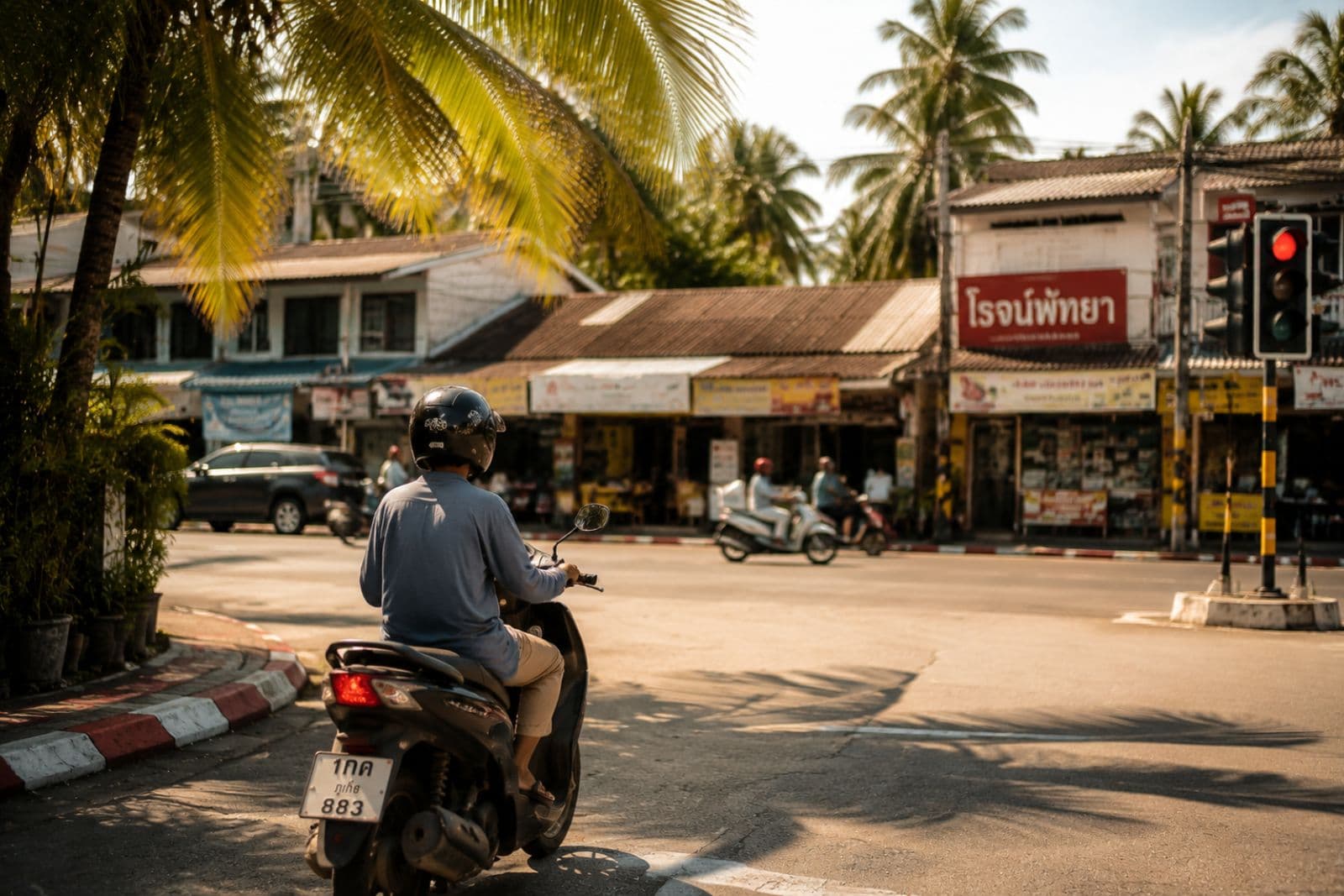
Getting around Phuket is where most newcomers form their first strong opinion about life on the island. The choice between hiring a car, buying one, renting a scooter or relying on Grab shapes daily life more than most other logistical decisions. Get it right and the island opens up — every beach, gym, restaurant and school run is within manageable reach. Get it wrong and half your budget goes on rideshare while you sit in traffic wondering why nothing feels connected.
The honest starting position for most new residents: for the first three to six months, don’t buy anything. Long-term car rental exists for a reason — it gives you a vehicle, comprehensive insurance, maintenance handled by someone else, and no capital tied up in an island whose long-term visa outcomes you may still be assessing. Buying comes later, once you know you are staying, once you know your preferred area, once you know a local mechanic you trust.
Scooters are a separate conversation, and one this guide takes seriously. Most residents ride them. Plenty of residents crash them. There is no single right answer — the honest read follows below, alongside the practical alternatives for anyone who is not ready to ride.
Rideshare — Grab and Bolt
Both Grab and Bolt work across most of Phuket. Grab has wider coverage and slightly more reliable driver supply; Bolt is often cheaper. Both take international cards or QR payments. Rides across most reasonable distances (Rawai to Chalong, Kata to Karon, Bang Tao to Cherng Talay) run ฿100-฿250. Longer rides — Rawai to Bang Tao, Kata to airport — ฿500-฿1,000. For a resident without a vehicle, budget ฿5,000-฿15,000 monthly on rideshare depending on lifestyle. Viable as a primary strategy only in busy areas (Patong, Kata, Chalong, Boat Avenue). In quieter areas like Rawai and Nai Harn, wait times of 15-30 minutes at peak hours make it unworkable as a daily-life dependency.
Songthaew
The blue trucks — Phuket’s fixed-route local public transport, running set circuits between Phuket Town and the beach areas. ฿20-฿40 per person for most trips. Cheap, genuine, and heavily used by the Thai community; less used by expats because the routes and stops are not intuitive without a Thai companion. Worth learning if you are on a modest budget. Coverage is limited to the well-trodden Phuket Town-to-beach corridors.
Private driver for the day
Booking a driver for a full day of errands, appointments or exploration costs ฿2,500-฿4,500 (roughly 10 hours) with an English-speaking driver and an air-conditioned vehicle. Useful for airport runs, temple day trips, or days when you need to move across three or four zones with time efficiency. Most residents book on demand rather than keeping one on retainer.
Long-term car rental
The default for most first-year residents. Small automatic cars ฿12,000-฿20,000 per month, mid-size SUVs ฿20,000-฿35,000, larger or higher-spec vehicles ฿40,000 and up. Insurance, maintenance and roadside assistance are typically included. Multi-month terms (six or twelve month commitments) attract lower rates. Reputable long-term operators serve the resident community specifically — a different market from the tourist rental strip. Works particularly well for residents who don’t yet know their area or whose visa situation is still evolving. Locking in ownership before you know you’re staying is a common early mistake.
Buying a car
Once you are settled — usually second year, sometimes later — buying becomes worth considering. Second-hand cars in Thailand hold value reasonably well by regional standards and the market is deep. Prices vary widely: ฿250,000 buys a serviceable used sedan; ฿1,000,000 buys a nearly-new SUV. New car pricing sits close to Western equivalents for comparable specifications.
Foreign residents can buy cars in their own name in most cases — the paperwork is administrable but not always straightforward, and a Thai property address or long-term visa helps. Working with a broker who specialises in foreign buyers is common practice; the fee is worth it for the paperwork alone. Insurance is inexpensive. First-class comprehensive cover on a mid-size car runs ฿15,000-฿30,000 per year — often a third of Western equivalents.
Scooters and motorbikes
The honest starting position: most Phuket residents ride scooters. It is the most practical daily-driver vehicle on an island where car parking is limited and traffic gets dense. It is also where the island’s real safety story lives. Rider fatalities and serious injuries on Thai roads are among the highest per-capita in the world, and Phuket’s contribution to that number is significant.
If you have real motorbike experience — meaning you have ridden a proper bike, not just sat on a beach hire scooter for a few days — a scooter can be efficient and enjoyable. Get a proper helmet, not the plastic hire-shop version. Get proper insurance that specifically covers motorbike use. Get a Thai motorbike licence — most travel and health insurers exclude claims from riders without the correct licence, which is a serious risk to run.
If you do not have motorbike experience, this is not the place to learn. The traffic culture, the road density, the pothole pattern, the sudden monsoon rain, the mixed truck-and-scooter road structure — none of it forgives inexperience.
The middle ground for scooter-curious new residents: rent a scooter for a month with a reputable long-term operator, take a private lesson or two with an experienced local rider, wear proper gear, and see how you feel. Some residents fall in love with it and never look back. Others try for six months and quietly go back to their car. Both are reasonable outcomes.
Renting long-term: ฿2,500-฿4,000 per month for a small automatic, ฿4,000-฿7,000 for a mid-size 150-200cc bike, ฿8,000+ for larger touring or off-road bikes. Reputable long-term operators include helmet, servicing and basic insurance. Owning: a used Honda Click or PCX in decent condition runs ฿40,000-฿90,000.
Licensing
Cars require a valid licence — Thai, international driving permit, or home-country licence depending on situation and length of stay. Motorbikes require a motorcycle-endorsed licence — a car licence alone is not sufficient. This is often the point that trips up new residents: the home-country car licence covers the rental car but not the scooter, and insurance is generally void when the rider is not properly licensed. Getting a Thai driving licence is a manageable process — a day at the DLT office in Phuket Town, some paperwork, a short written test and practical. Agents can handle the process for a fee. Worth doing early rather than putting off.
Airport transfers
For newcomers still setting up, pre-booked airport transfers via a licensed operator run ฿500-฿1,500 depending on where you are being taken. Once you are settled with your own vehicle or comfortable with Grab, the return trip is easier to handle yourself.
Dining
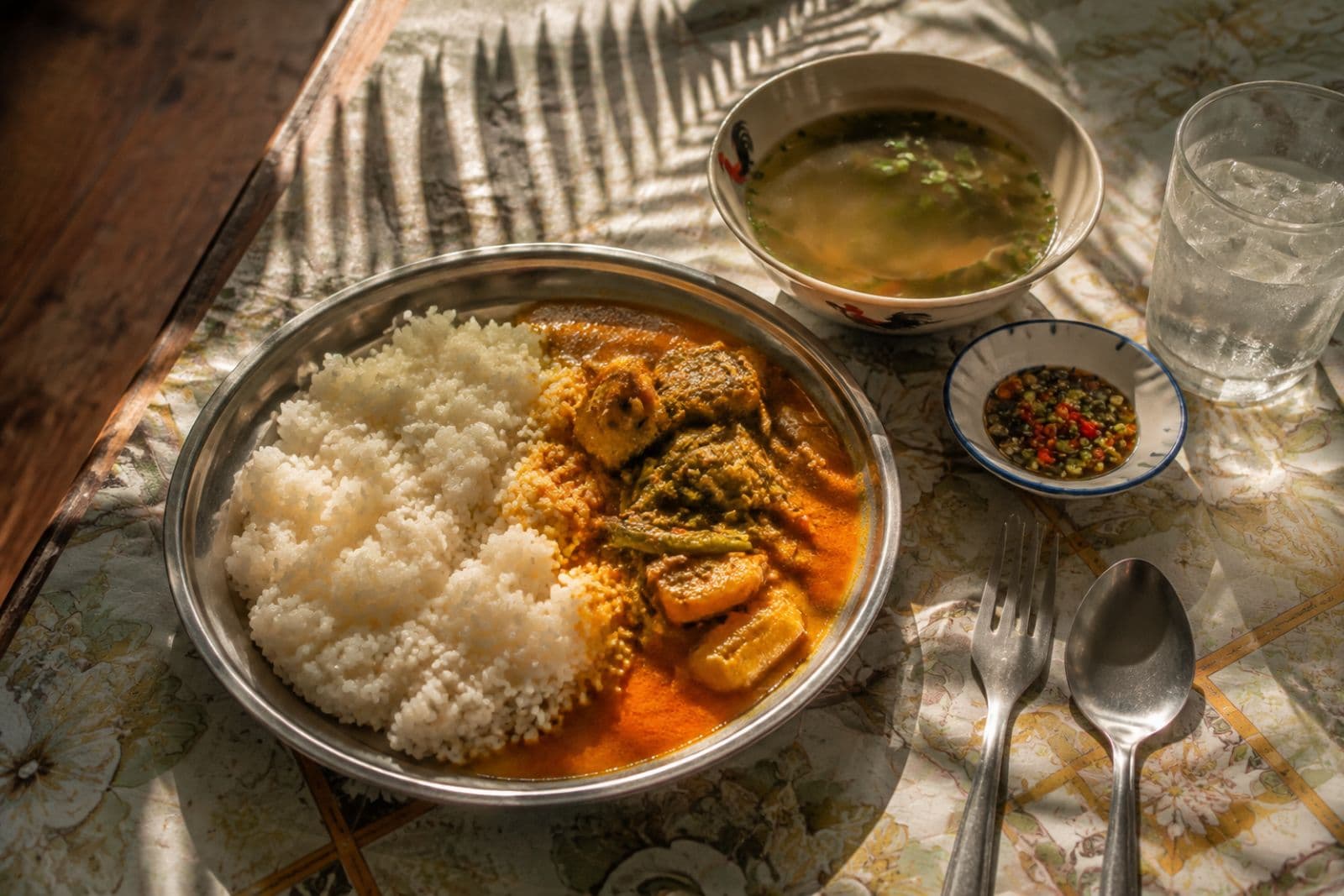
Eating well on Phuket is one of the reasons residents stay. It is not just that the food is cheap — though it can be. It is that the range and quality of everyday food available to a settled resident is genuinely excellent by regional standards, and that the everyday cost of it (as opposed to the tourist-strip cost) is low enough that “cooking every meal at home” stops being the obvious economic default it is in Western countries.
The mental adjustment most new residents make in their first month is realising they can eat lunch out most days for less than what a supermarket sandwich would cost back home. A typical Thai neighbourhood lunch runs ฿60-฿150. A decent coffee is ฿60-฿120. A weekday dinner with drinks at a mid-range international restaurant sits at ฿500-฿1,200 per person. Groceries you still need — but the baseline shifts.
This section is not a restaurant list. It is a resident’s read of the eating landscape — what to expect from each cuisine cluster, where to find markets, how the delivery apps compare, and where residents actually buy groceries. When you want to find a specific place, the categories in the Phuket Community directory (Restaurants, Cafes and Coffee) are where the vetted picks live.
Local Thai — the everyday backbone
Neighbourhood Thai restaurants — the plastic-chair, family-run, mostly-Thai-clientele kind — are the everyday backbone of resident eating. Every area has them. Menu is broadly similar across the island: curries (green, red, massaman, panang), stir-fries (pad krapao, morning glory, cashew chicken), soups (tom yum, tom kha), noodles (pad thai, boat noodles, pad see ew) and rice plates (khao pad and khao gaeng — the meal-with-a-choice-of-three-curries plate for ฿60-฿80 that most residents live on).
Southern Thai food is a distinct thing worth understanding. More turmeric than central Thai. More curries. Spicier by default. Some dishes you will only really find in the south — moo hong (slow-braised pork belly), khao yam (Southern Thai rice salad with dried shrimp and lime), gaeng tai pla (fermented fish curry, an acquired taste), oh eaw (a shaved ice dessert with jelly and beans). Once you settle into the Phuket food scene, the pull is more toward these than the standard central Thai menu.
Western, Japanese, Korean, everything else
The international dining scene has grown substantially over the past decade. Italian is the largest cluster — dozens of pizzerias and Italian restaurants across the island, from casual neighbourhood places to serious chef-led kitchens. Japanese runs a close second — sushi, ramen, izakaya, teppanyaki — spread across most areas. Korean has expanded rapidly, with dedicated Korean neighbourhoods in Boat Avenue and Chalong. Middle Eastern and Indian cuisines have long-standing communities in Patong and Karon.
Higher-end international dining concentrates in Bang Tao, Cherng Talay and Cape Panwa — the villa-and-resort corridors. Everyday international eating is spread more evenly. As a rule of thumb: the resident-facing international restaurants (the ones that fill on weeknights with a mostly-expat local crowd) are the ones worth returning to, not the tourist-strip international restaurants where the same menu costs twice as much.
Street food and markets
Street food is central to Phuket eating culture. The two main circuits:
Weekend markets. Phuket Old Town’s Sunday walking street on Thalang Road is the largest and most famous, drawing crowds from across the island and beyond. Chillva Market in Phuket Town (Wednesday to Saturday evenings) is a permanent food-market space with a proper resident following. Various neighbourhood markets — Sundays in Rawai, weekly rotations in Karon, various pop-ups elsewhere — spread across the calendar.
Everyday street food. Grilled skewers, roadside soups, portable som tam stalls, evening rice-and-curry stalls set up on residential corners — this happens across the island but is concentrated in Rawai, Chalong, Phuket Town, and the corners between them. The rule that matters: what looks busy is what is good.
Street food safety. Worth being sensible in the first few weeks, but by month two most residents eat street food routinely without incident. The rules that matter — hot food should be actively hot (not lukewarm and reheated), seafood should look fresh and be turning over quickly, and the busiest stalls are usually safest for exactly that reason.
Delivery apps
Three main options: GrabFood, LineMan Wongnai and Robinhood.
GrabFood has the widest restaurant coverage, uses the same account as Grab rideshare, and integrates payment and address book easily. Delivery fees run slightly higher than the others.
LineMan Wongnai is the local Thai leader. Runs on the LINE app most residents already have. Often carries restaurants that GrabFood does not. Menus are sometimes only in Thai — the Wongnai section (integrated ratings and photos) helps.
Robinhood is a Thai-owned alternative with a rotating promotional strategy. Sometimes noticeably cheaper for the same restaurant. Coverage is less consistent.
Most residents install two of the three and cross-reference. Delivery fees run ฿20-฿80 per order depending on distance and time of day. Peak hours (7-9pm) can add 20-40 minutes to stated times.
Groceries
Where residents actually shop:
Villa Market — the imported and expat-oriented supermarket chain, with multiple locations across the island. More expensive than local supermarkets but stocks imported brands, Western meats, cheeses, wines and everything else you might miss. Convenient for weekly shops.
Central Food Hall (inside Central Floresta and Central Festival) — mid-range, mixed local and imported. Good bakery and prepared foods.
Big C and Tesco Lotus — mainstream Thai supermarkets. Cheaper. Wider fresh produce range. Less imported selection but a solid backbone for daily groceries.
Makro — the wholesale option, larger packs and cheaper unit prices, popular with families and food-service operations. The main branches are on the bypass.
Wet markets — the fresh markets running mornings across neighbourhoods (Rawai, Kathu, Phuket Town and Cherng Talay all have well-established ones). Best prices for fresh produce, meat, seafood and herbs. Cash only. English is limited. Learning a few key words of Thai helps.
Most settled residents split their groceries — a wet market for fresh, Villa or Central for imported, Big C or Tesco for staples. Delivery is available for most of the major supermarkets via their own apps or via the delivery platforms above.
Take it with you
Enjoyed this? Get the PDF for later
A single email delivers the whole guide as a PDF. Read it on the plane, share it with a friend, come back to it when you need it.
Free · one email · unsubscribe anytime.
More from Phuket Community
Visiting Phuket
A resident's guide to a week done right — where to eat, swim and skip, without the tourist tax.
Read the guide