Phuket Community guide
Visiting Phuket
Where to eat, swim and skip, without the tourist tax
By Phuket Community · Updated August 2026
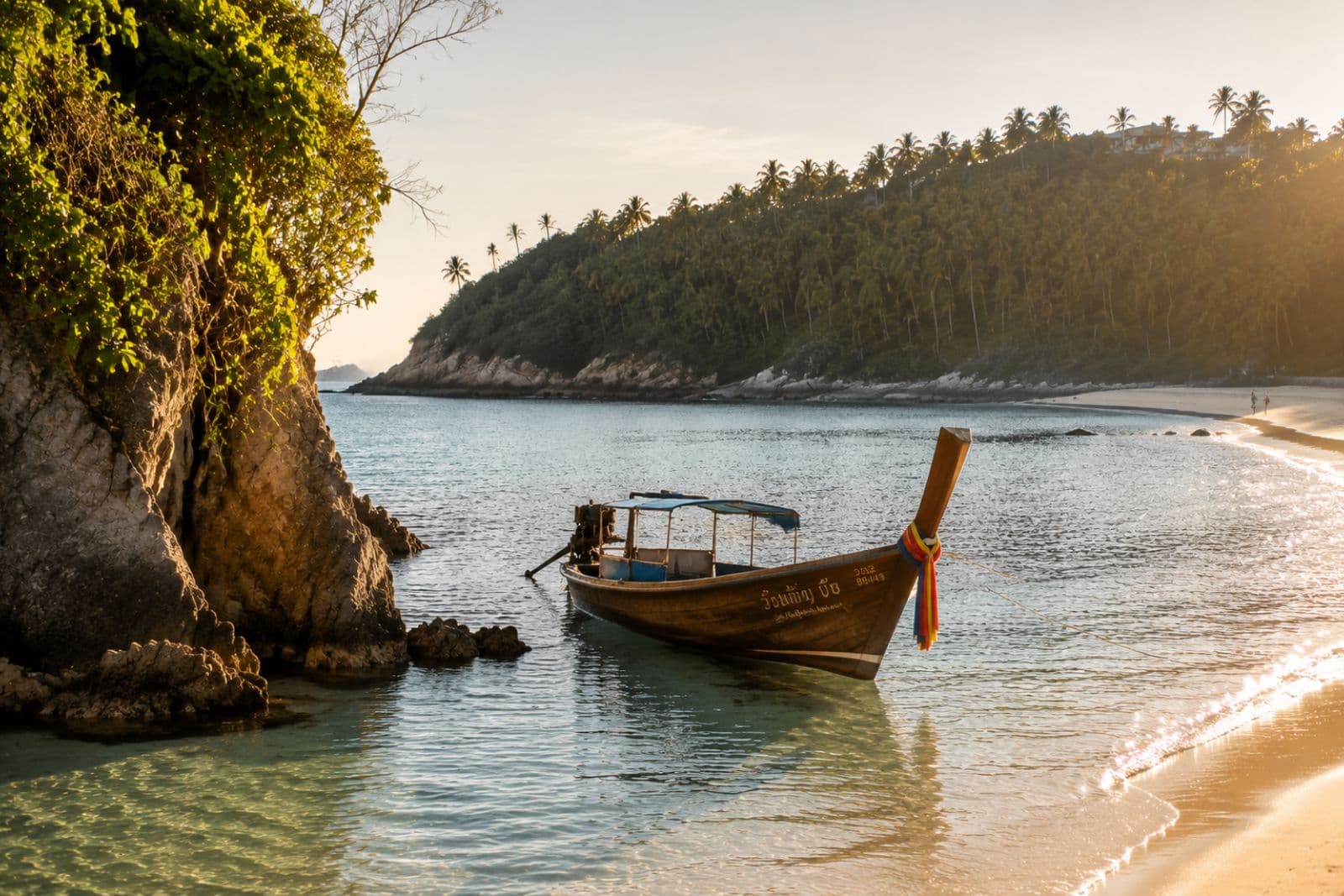
Take it with you
Save this guide as a PDF
Enter your email and we'll send a copy you can read offline or share with the person planning the trip.
Free · one email · unsubscribe anytime.
Where to base yourself
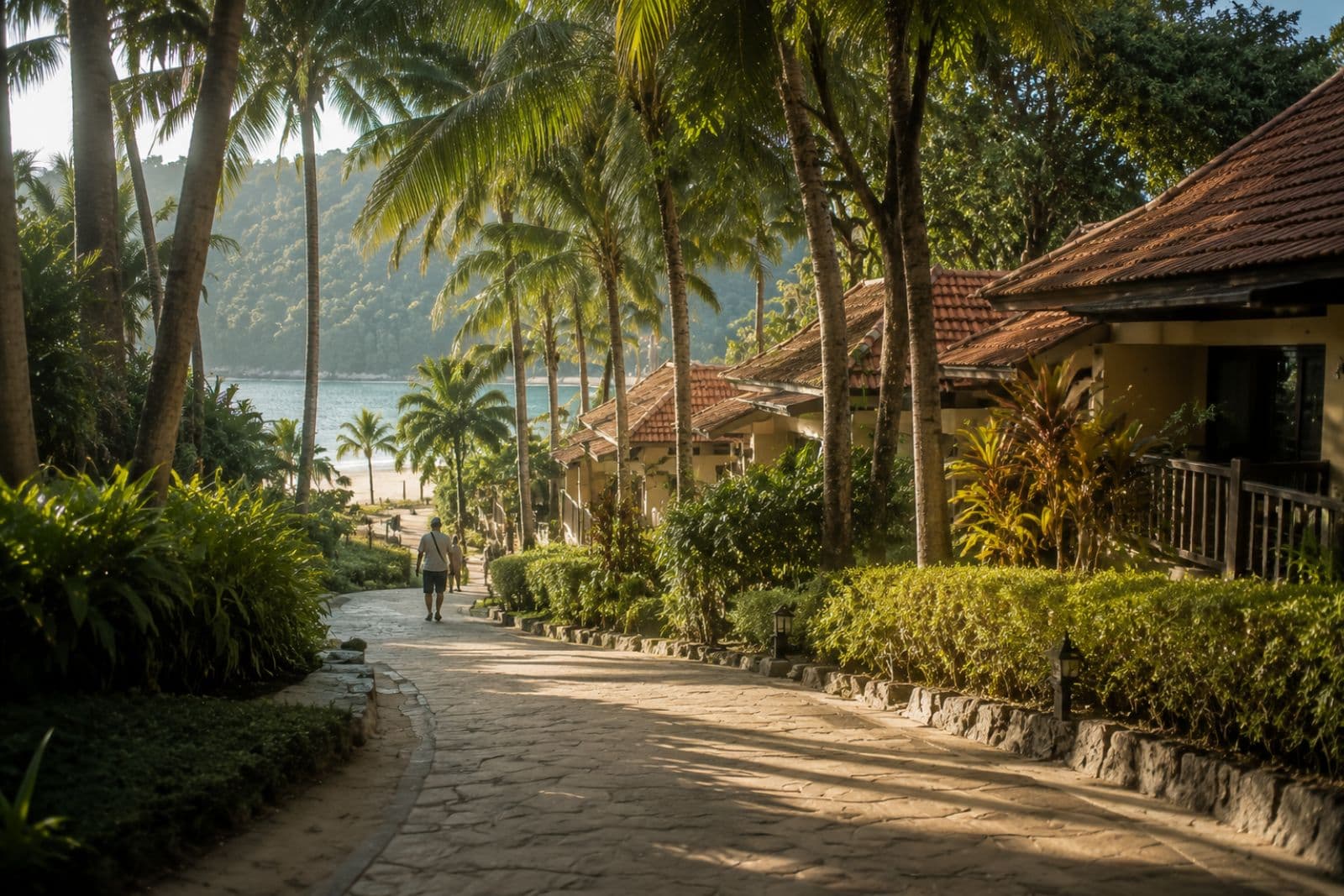
Where you stay on Phuket shapes what your week looks like more than which flights you took to get there. The island is bigger than most first-time visitors expect — the drive from the southern tip to the northern airport is 45 minutes without traffic, an hour or more with it. The beach outside your hotel, the walk to dinner, the time it takes to reach the boat pier for your island day, whether you can get to a Muay Thai fight night in under half an hour or over an hour — all of it comes down to where you base yourself.
This section is written to help you match a base to the kind of week you actually want, rather than to rank areas as best or worst. No area is better than another in the abstract. Different areas give you different weeks. The mistake most visitors make is picking based on the cheapest flight-plus-hotel package and then wondering, four days in, why the holiday didn’t feel the way they’d hoped. A few hours spent choosing well pays off more than any single upgrade.
What follows groups the main visitor-friendly areas by the kind of visit each rewards. Family beach weeks. Couples looking for boutique quiet. Fitness or active weeks. Nightlife-first weeks. Culture and food weeks. Luxury weeks. Some overlap between categories exists — a Bang Tao villa can serve a family or a couples base depending on the villa — but the shape of the area shapes the shape of the week.
Family beach week — Kata, Karon, Nai Harn
Kata, Karon and Nai Harn form the traditional family beach corridor on the south-western side of the island. Long soft-sand beaches with amenities close by, a good spread of family-oriented restaurants and small shops, and hotels and rentals at every price point.
Kata sits between Karon to the north and Nai Harn to the south. Its beach is one of the more swimmable stretches on the island, and the town behind it has enough restaurants, cafes and shops that a family can settle in for a week without ever needing a taxi. Karon is longer, less busy and slightly quieter — a good fit for families who want the beach without the town noise. Nai Harn is south of both, greener, with a lake behind the beach and a settled feel; often the choice for families who’ve been to Phuket before and want something calmer.
Airport transfer is 60-75 minutes without traffic and longer with. A real consideration on arrival and departure day, irrelevant in between. Kata’s dining scene runs at the tourist-tax mark-up — the walkability is worth it with children in tow, but expect to pay more for less good food than you would in a less tourist-heavy area. Nai Harn is quieter and better value; Karon sits between the two.
Couples and boutique — Cherng Talay, Surin, Bang Tao
The north-west coast between Cherng Talay and Bang Tao is where the boutique and couples market has concentrated. Villas rather than mass-market hotels, quieter beaches, and dining and beach clubs pitched at adult travellers rather than family holidaymakers.
Bang Tao Beach is one of the longest on the island and the heart of the west-coast beach club scene. Surin sits south of it — smaller, more residential in feel. Cherng Talay behind the beach has a growing restaurant and cocktail-bar scene along Boat Avenue and the wider Laguna area, which gives couples somewhere to walk in the evening rather than needing to book a taxi for every dinner.
Airport transfer is 20-25 minutes — the shortest of any resident area on the island. Prices skew higher than the south, particularly in high season, and traffic on the main junctions gets heavy from December through March. Best for couples who want a slower rhythm, better food, and villa or boutique-hotel accommodation rather than mid-market hotels.
Nightlife-first — Patong and Kamala
Patong is the party centre of the island. Bangla Road is here, most of the large clubs are here, and if nightlife is genuinely the reason you came to Phuket, staying in or right beside Patong makes practical sense. Kamala, just north of Patong, gives you Patong access without living in it — a good set of beach clubs are on Kamala Beach, and the fifteen-minute taxi to Bangla is a fair trade-off for a quieter room to come back to at four in the morning.
Airport transfer is 30-40 minutes. Beach access is direct but the beaches themselves are working tourist beaches rather than serious swim destinations. This is not the base for families or slow-travel couples. It is the base for visitors whose week is built around the evening rather than the afternoon.
Culture, food and walkability — Phuket Old Town
Phuket Old Town is the cultural centre of the island — Sino-Portuguese heritage shophouses, a walkable grid of streets, an increasingly interesting independent restaurant and cocktail scene, and something that genuinely doesn’t feel like a beach holiday. The trade-off is the beach: any beach is a 20 to 30-minute drive.
This is the base for visitors who want the food, the walking, the heritage and the small-hours cocktail bars more than they want the sand. It’s also the base returning visitors often shift to on their third or fourth trip, once they’ve exhausted the beach options and want a different kind of week. Airport transfer is 25-30 minutes. Accommodation runs from restored shophouse guesthouses at reasonable prices to boutique heritage hotels at the top end.
Fitness and active — Rawai, Chalong, Nai Harn
The south of the island is Phuket’s fitness heartland. Rawai, Chalong and Nai Harn cluster together across a small radius that contains most of the serious Muay Thai camps, the CrossFit and functional gyms, the dive schools launching from Chalong Pier, the yoga studios and the resident training community that sustains all of it.
This is the base for a Muay Thai training week, a dive certification block, a yoga retreat, or a mixed active week combining several of the above. Rawai’s town runs at a settled resident rhythm — restaurants and services scaled to full-time residents rather than one-week tourists, which visitors on an active week tend to appreciate. Airport transfer is 45-55 minutes. Beach access is via Rawai’s seawall (less swimming, more dining and social) or a five-minute drive to Nai Harn or Ya Nui.
Luxury and private — Cape Panwa, Bang Tao and Layan villas
The luxury end of the market clusters in two places. Cape Panwa on the south-eastern side of the island hosts several high-end resorts on their own peninsulas — private-feeling, quiet, with dining and pool access within the property so a visitor barely needs to leave for a full week. Airport transfer is around 45 minutes.
The Bang Tao and Layan corridor further north has the highest concentration of private villa rentals at scale — four bedrooms and up, private pool, private chef and management team on request. Villas here vary widely in price by season and size, but the top end runs comparable to fine European villa markets in high season. Airport transfer is 20-25 minutes. This is the base for multigenerational trips, small groups travelling together, and visitors who want the villa experience rather than the hotel one.
Splitting your stay across bases
Some visitors split their week between two or three bases — a few nights south, a few nights north, a couple of nights in Old Town — to sample the island rather than commit to one area. This is a reasonable approach and the guide encourages it if your week can accommodate the moves. Two or three nights at the same base gives you enough time to find your local coffee, understand the walk to the beach and settle in; less than that and you’re mostly checking in and out.
Returning visitors often try a different base each trip until they find the one that suits them, and when they do, they tend to book the same rental year after year. If it’s your first Phuket visit and you don’t know which base to choose, the most common piece of resident advice is a straightforward split — five or six nights in the south (Kata, Nai Harn, Rawai) and two or three in the north-west (Cherng Talay, Bang Tao) or Old Town. You’ll see enough of both to know which side you want to return to.
Before you come
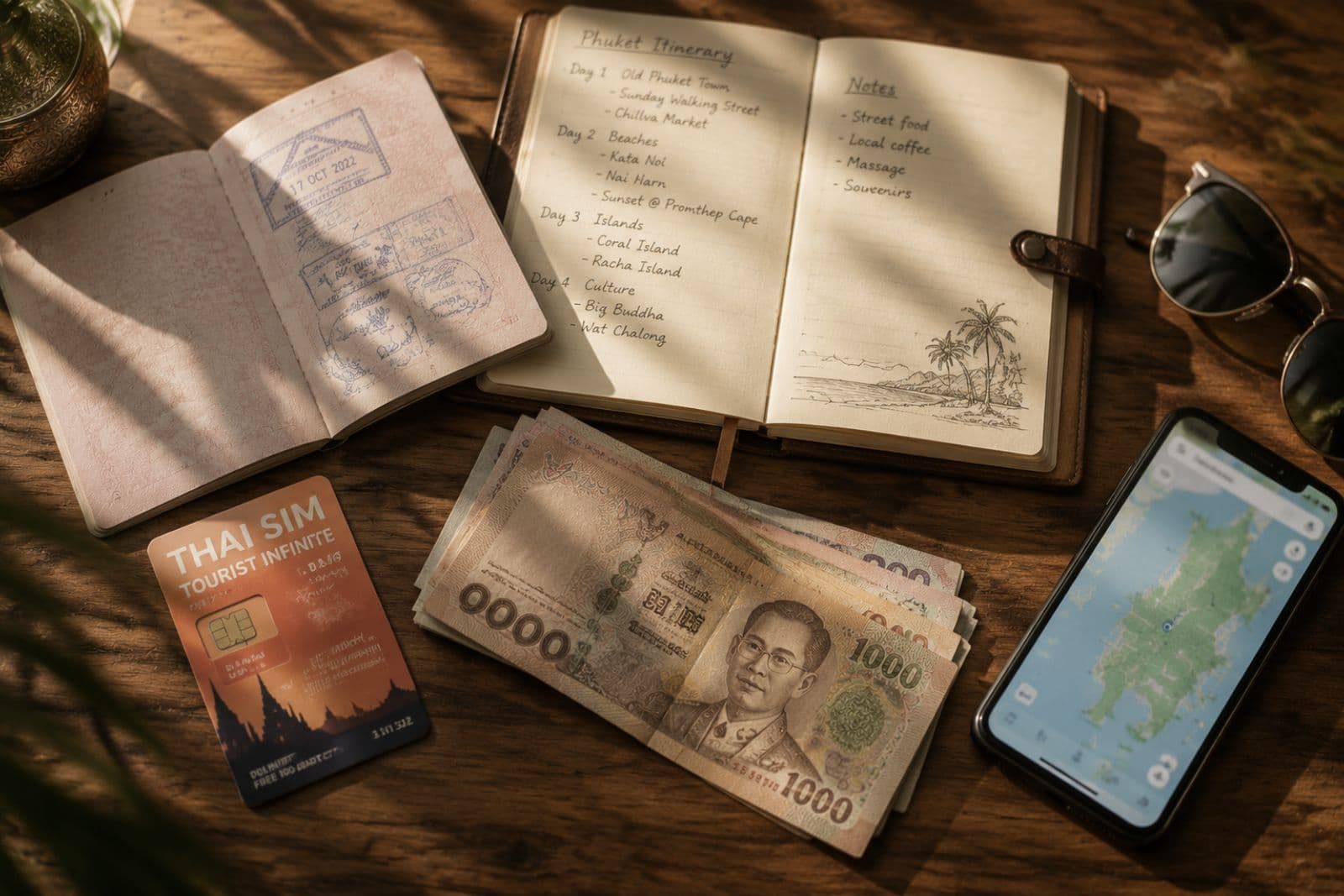
Most Phuket weeks are made or broken before the plane lands. Not by which hotel you booked — that’s the previous section’s question — but by which small handful of things you pre-arranged and which you sensibly left to figure out on arrival. Some things sell out or price up if you don’t book ahead. Most things are the opposite: booking ahead means paying a mark-up for something you could have walked into for less.
The instinct most first-time visitors have is to book everything. The instinct most experienced Phuket visitors follow is the opposite — pre-book only what actually needs booking, and leave the rest to be decided when you’re on the island. This section is the working list of which is which, plus the practical pre-arrival admin (SIM, cash, insurance, entry rules) that saves you the first-morning scramble.
The short version of the philosophy: pre-book the moving parts — transfer, accommodation, boat trip if it’s the fixed point of your week, cooking class, fine-dining reservation, Muay Thai fight night ticket. Walk into everything else.
Book ahead
Airport transfer for your first arrival. Landing at 11pm after a fifteen-hour trip is not the time to negotiate with the airport taxi rank. A pre-arranged licensed driver meets you in arrivals, drives you to your accommodation for a set price, and knows the road they’re driving. The one-time cost is worth the arrival-day certainty. The return trip is easier — you know the ropes by then, and Grab or Bolt often works fine.
Villa or hotel in high season. If you’re visiting between November and April, book well ahead. The good rentals and popular hotels fill up months out, and last-minute booking in high season means paying more for what’s left. In low season (May to October) you have significantly more flexibility.
The popular boat trips. Boat capacity is limited on the popular routes, and the reputable operators sell out on peak-season days. If a specific boat trip is a fixed point in your week — particularly the Similans, which run November through April only — book it early. Less-popular boat trips can generally wait.
Respected cooking classes. The good operators book out on weekends and in high season. A weekday class in low season is easier to walk into.
Muay Thai fight nights at the major stadiums. If you want the full-production Friday or Saturday fight card, book online before you arrive — the good seats go early. Weeknight cards are typically easier.
Fine-dining reservations. The destination Thai restaurants and hotel fine-dining rooms need a week’s notice in high season, sometimes more. Not for the mid-week spontaneous places, but for the specific rooms you already know you want.
Walk into
Most restaurants, particularly Thai neighbourhood restaurants. You can walk in almost anywhere for lunch, and dinner is usually available at short notice if you’re willing to eat by 7pm.
Most beach clubs, on weekdays. Sundays are the busy day — book ahead for that. The rest of the week is generally open.
Neighbourhood massage shops. Booking online is rarely useful; walk in when you feel like it. Peak evening hours (7-10pm) sometimes fill, but there’s always another shop nearby.
Gym drop-ins. Almost every gym takes walk-ins. The Muay Thai camps run beginner sessions on demand.
Most tours and experiences. Book the day before, or morning of, from your hotel concierge or directly with the operator. Booking through a global platform is usually a mark-up on something available locally at the standard price.
Most bars. Old Town cocktail bars sometimes fill by 10pm on weekends, but early evening is always fine.
Practical pre-arrival admin
SIM card. Both major carriers — True and AIS — sell tourist plans at the airport arrivals hall. Standard offering is 7 to 10 days of unlimited data at a fixed price, sometimes bundled with a small credit for calls. Both networks give good coverage across Phuket; either is fine. If you’re staying longer than 10 days, ask the airport counter for a 30-day plan instead of stacking short ones — better value.
Cash and card. QR payment via SCB, Bangkok Bank and Kasikorn works almost everywhere — restaurants, cafes, taxis, tour operators, most street food stalls. A small amount of cash (a few thousand baht) covers markets, older stalls and the occasional operator whose QR isn’t working. ATMs charge foreign cards around ฿220 per withdrawal, so pull larger amounts less often rather than smaller amounts more often.
Travel insurance. Get some. Motorbike and scooter accidents are the single most common insurance claim from visitors — and the majority of policies exclude motorbike accidents unless you hold a motorcycle-endorsed licence and wear a helmet, and often exclude them entirely. If riding a scooter is part of your plan, read the policy carefully. If it isn’t, most reasonable policies cover the actual risks (illness, injury, lost luggage, cancellation) fine.
Passport and visa. Rules change periodically. As of the guide’s most recent update, most Western passport holders get 60 days visa-exempt entry into Thailand — no application, no fee — provided the passport has at least six months remaining validity from the date of entry. Verify current rules on the official Thai immigration site before you fly. If you’re staying longer than 60 days, look at the LTR, DTV or education visa options in advance.
The daily rhythm
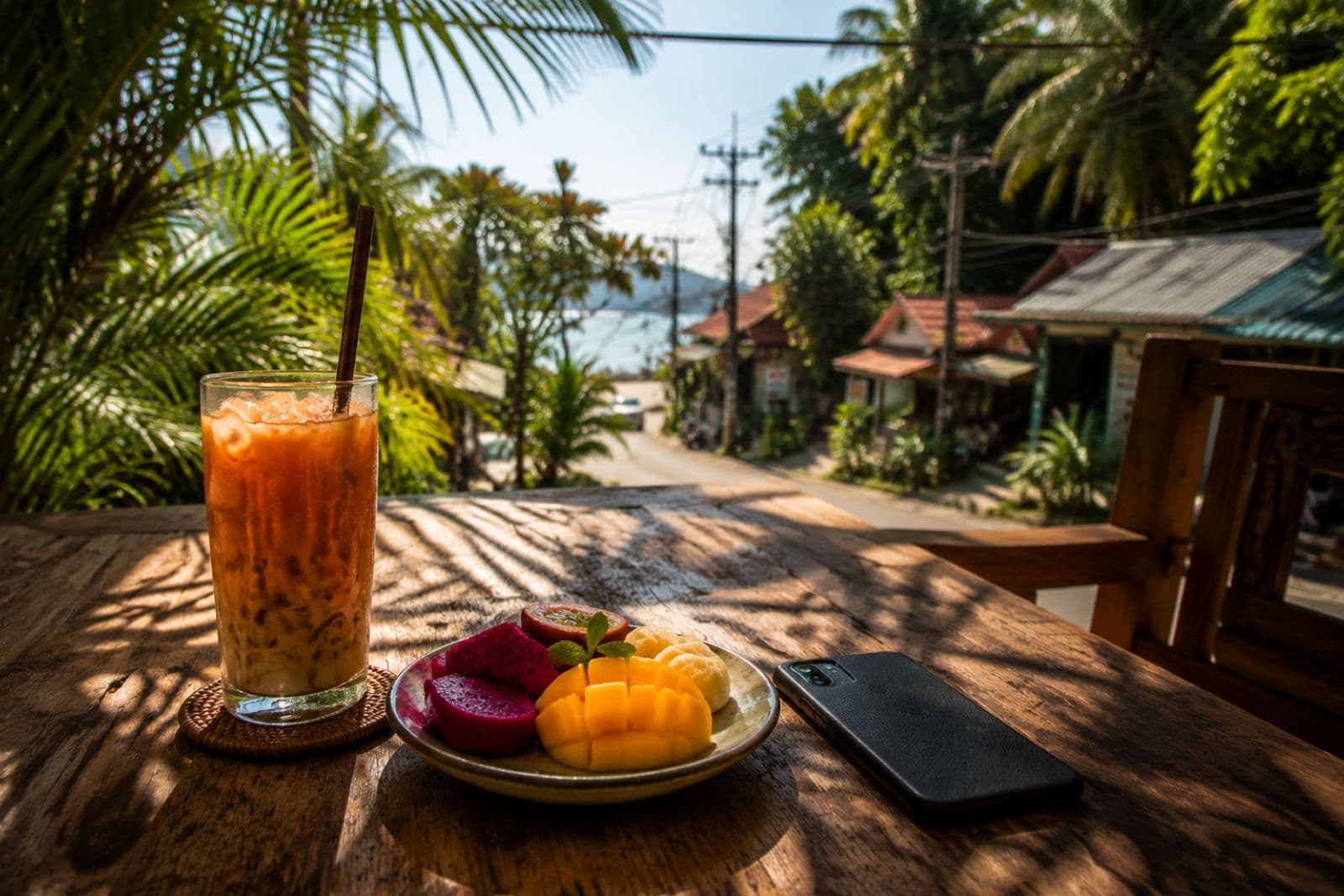
Not all Phuket visits are the same shape. Before we get into the suggested rhythm for a week, worth naming three distinct kinds of visit — because the rhythm depends on which one you’re here for.
The short-term visit. One week, sometimes two. Package holiday, honeymoon, family beach week, first-time trip. Most of this section addresses this reader — the practical shape of a good week, without overloading it.
The month-long stay. Longer holiday, workation, extended break, or an early trial run ahead of a possible longer stint on the island. The rhythm is different — half the days are “living” days rather than “visiting” days. You need to grocery shop, do laundry, work a couple of hours, take a slow morning. Fitting in every big activity is not the goal; finding a sustainable routine is.
The seasonal regular. Returning to Phuket for weeks or months of the year, often the same weeks each year, often in the same rental. By this stage the rhythm is routine rather than schedule — you know your gym, your coffee, your favourite dinner spots, and your visit shape yourself around what’s actually enjoyable, not what a guide told you to do.
The rest of this section is written for the short-term visitor, with occasional notes for month-long stayers where the shape genuinely differs.
Suggested one-week shape
Beach days (two or three). Not identical beach days — one at your local beach in Kata or Nai Harn or Bang Tao, one on a boat trip to Phi Phi or the Similans or Racha, maybe one at a beach club on the west coast. The mix matters more than the beach.
Old Town day (one). A morning walking the heritage streets of Phuket Town, lunch at a Southern Thai restaurant, an afternoon cafe stop, dinner in the Old Town restaurant scene, cocktails in one of the small bars. Feels like a different city entirely to the beach areas — that’s the point.
Island trip day (one). Whether it’s Phi Phi, the Similans, Racha or Coral, an island day is worth the boat ride and the early start. The trade-off is a long tiring day, so build a lighter day around it.
Muay Thai fight night (one evening). Doesn’t take a whole day — an evening slot on a card night, ideally at an established stadium. Even if you have no interest in the sport, a Muay Thai card is one of the more distinctive local experiences on the island.
Long lunch or down day (one). A morning at the pool, a two-hour lunch at a restaurant not near your hotel, an afternoon massage, an early dinner. This is the day that keeps the rest of the week enjoyable.
Flex day (one). Kept open. Whatever you found you loved earlier in the week, do it again. Whatever the weather doesn’t allow (rain the day of the boat trip), shift here.
Why the mix matters
Phuket rewards the balance between active and slow more than most Southeast Asian destinations. The active options — Muay Thai, dive, boat trips, temple visits, gym, hikes — are excellent but demanding. The slow options — pool, spa, long lunch, sunset drinks, cocktail bar — are also excellent but need to be earned. Doing seven consecutive days of active leaves you needing a holiday from your holiday. Doing seven consecutive days of slow leaves you wondering why you flew here rather than staying home. The good week alternates.
The half-day rhythm
Most residents structure their days in halves rather than full blocks. Morning active — beach, gym, Muay Thai, walk, work — then a proper two-hour lunch. Afternoon rest during the hottest hours, usually 1pm to 4pm. Evening slower — swim, spa, cocktail, dinner. The heat makes this less a choice than a necessity; trying to run at full pace from 8am to 10pm in Phuket humidity ends badly.
The visitors who have the best weeks arrive with a rough plan and let the days shape themselves. The visitors who have the worst weeks arrive with a locked itinerary and try to check every box from every “must-do” list they read before the flight. That approach is the fastest way to have a bad week here.
For the month-long stayer, the shape changes — perhaps three days a week of “visitor” activities and four of “living” (grocery run, laundry, coffee at your local, gym, work a couple of hours). The one-week shape above is an approximation. Adjust for the length of stay, not against it.
The following sections cover where to eat, where to swim, what to do (matched to different traveller types) and what to skip.
Where to eat
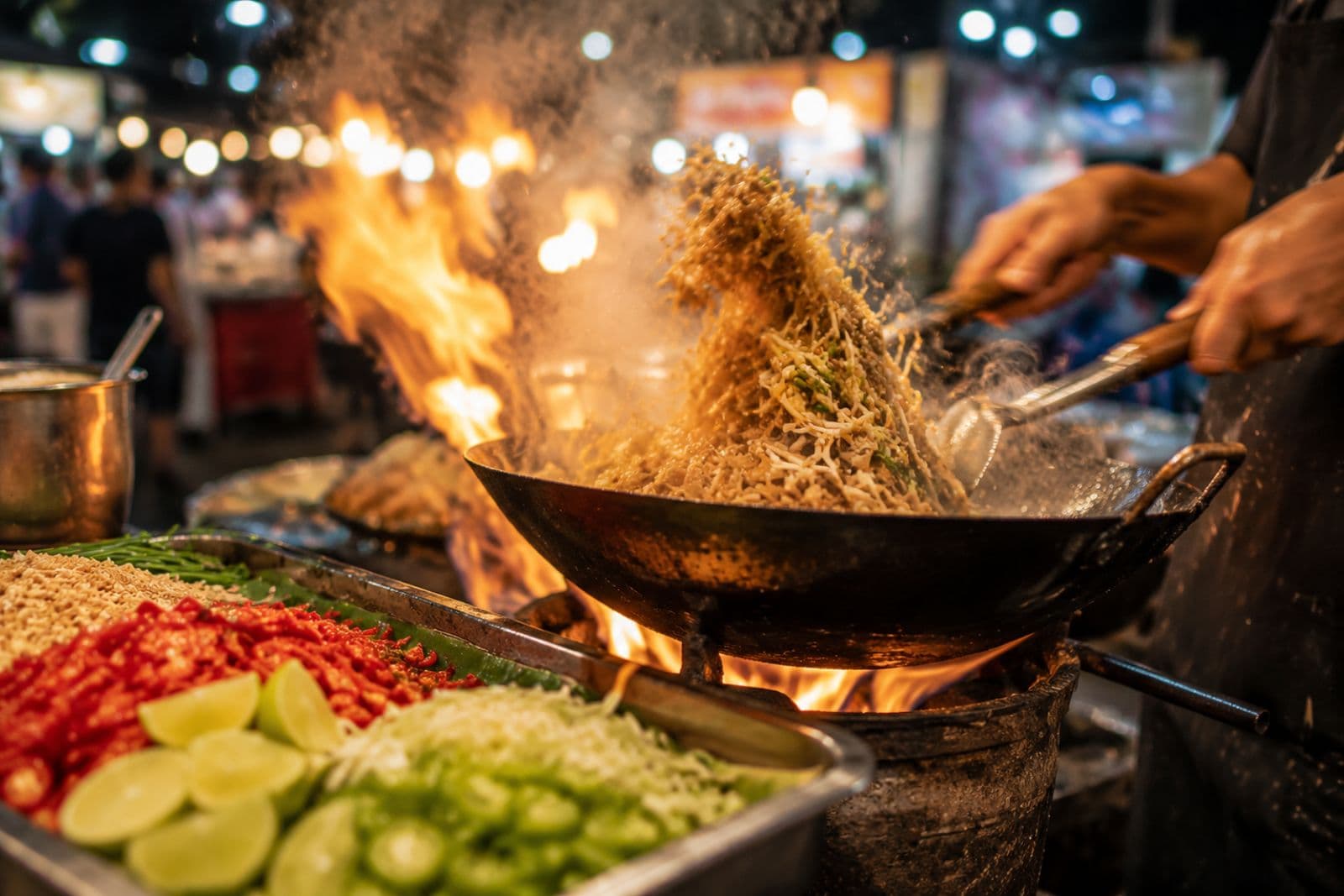
The most common visitor mistake with Phuket food is eating in the hotel restaurant on the first night. Every hotel has a Thai menu; every hotel Thai menu is a soft-focus version of the real thing. It’s fine, but it isn’t Phuket. The reset happens the moment you walk into a neighbourhood Thai restaurant — half the price, twice the flavour, and the food you’re actually here to eat.
Phuket has its own regional cuisine — Southern Thai, with a distinct Sino-Portuguese heritage from the tin-mining boom of the last century. More turmeric than central Thai. More curries. Spicier by default. Some dishes you’ll only find on this island and the surrounding mainland. Getting a proper introduction to that food in your first two or three days is worth doing.
This section is not a comprehensive list. It’s a curated shortlist by occasion, structured to make sure a one-week visit hits the essentials without turning into a food-tour schedule.
Casual Thai for a first night
Every base area on the island has good neighbourhood Thai restaurants within walking distance — the ones with plastic chairs, a busy kitchen and a mostly-Thai clientele are usually the ones worth eating at. Order a green or red curry, a stir-fried morning glory (pak boong), a whole grilled fish if it’s a seafood-focused spot, and a Thai iced tea to break the heat. Expect to pay ฿300-฿500 per person for a proper meal. This is the meal that resets your expectations of what Thai food should taste like — most visitors realise afterwards how much they’d been missing.
One splurge dinner
Phuket has a small but serious fine-dining scene, split between the heritage mansion restaurants in Phuket Town (where the Sino-Portuguese architecture is part of the experience), the beach-view fine-dining rooms at the destination resorts on the west and south coasts, and one or two chef-led kitchens in Cherng Talay. A splurge dinner runs ฿3,000-฿8,000 per person before drinks, sometimes more at the top end. Book a week ahead in high season. Worth doing once mid-week — one splurge dinner in a Phuket week feels like an occasion; two starts to feel like a mistake.
One street food or market experience
Phuket’s Sunday walking street (Thalang Road in Old Town) is the most concentrated introduction to local street food, but the Sunday-only timing catches some visitors out. Weekday alternatives include the smaller local markets in most areas, plus the standalone street-food strips in Old Town on Ranong Road. The general rule is to eat what looks busy — the crowd is the reliable quality signal. Bring some cash for older stalls; QR works at most modern ones.
Where to eat near your base
Each of the base areas from Section 1 has its own dining character. Kata and Karon have plenty of tourist-friendly restaurants and a smaller number of genuinely local ones. Rawai, Nai Harn and Chalong lean local — this is where the resident community eats, and the food is priced accordingly. Cherng Talay and Bang Tao have the wider international dining spread (Italian, Japanese, Vietnamese, Middle Eastern) alongside high-end Thai. Old Town is the destination-dining hub. Wherever you’re based, ask the front desk which restaurants their staff actually eat at — that answer is usually better than the printed brochure.
One food experience
Phuket runs several respected cooking classes — half-day sessions that typically include a market visit, a hands-on cook of 3-4 dishes, and a proper lunch or dinner from what you made. ฿1,500-฿3,500 per person. There are also small-group food tours through Old Town, and chef’s tables at a handful of restaurants. Any of these turns a meal into something you’ll remember longer than the meal itself, and works well as the “one food experience” slot in a Phuket week.
A note on the tourist tax
Where the mark-up hits hardest is dining inside hotels, on the beach strips, and at the tourist-facing operators along Bangla Road and Kata Road. The same food a hundred metres inland from those strips costs less than half. This isn’t judgement — sometimes the convenience is worth the mark-up, particularly with young children or on a long-flight day. But the choice is worth being conscious of, especially when the food itself is often better in the less-marketed places.
Where to swim
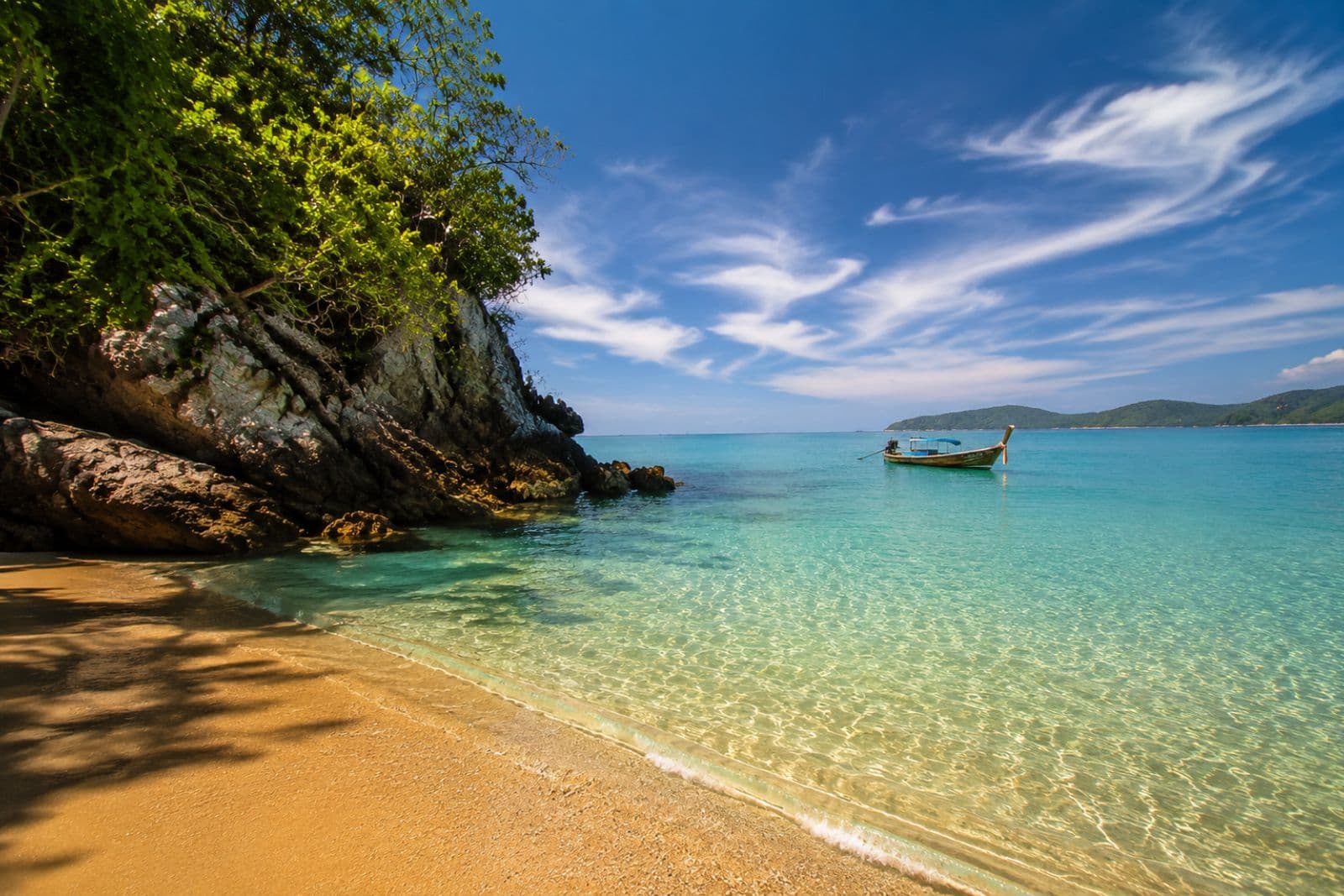
The most common visitor mistake about Phuket beaches is assuming Patong is one. Patong is a working tourist strip that happens to have sand — the beach itself is not why anyone with options swims there. The real swim beaches are elsewhere.
Phuket has one of the best beach spreads of any Thai island. Long soft-sand west-coast beaches with real swimmable water. Smaller, quieter beaches for people who don’t want the crowd. Beach club destinations for people who want a DJ. And a handful of surrounding islands worth the boat ride for the day. This section organises them by what you actually want from the beach, not by ranking.
Ocean safety gets a paragraph at the end. Read it — this is one of the few places on the island where visitors get into genuine trouble, and the guide has an obligation to name it.
Family beaches — Kata, Karon, Nai Harn, Kamala
Soft sand, calm water in high season, amenities close by (restaurants, restrooms, umbrella rentals, sunbed hire), and lifeguard presence on the main beaches. Kata is the most popular family beach and the most amenity-dense. Karon is longer and quieter. Nai Harn is the local favourite, with a lake behind it that gives the area a distinct feel. Kamala is less crowded than the others and works well for families who prefer a less-tourist rhythm.
Quiet beaches — Ya Nui, Nai Yang, Layan
Ya Nui is a small cove tucked between Nai Harn and Promthep Cape on the southern end — clear water, some shade, good for a lazy afternoon rather than a full beach day. Nai Yang is a long stretch on the northern end near the airport, popular with the resident community and rarely crowded. Layan sits at the northern end of Bang Tao — quieter than Bang Tao proper, with amenities close by. All three are the answer to “I want a beach without the beach club scene.”
Snorkel-from-shore beaches — Freedom Beach, Banana Beach
Freedom Beach is accessible either by boat from Patong or by a steep walk down from the road — the effort keeps the crowd manageable and the water clear. Banana Beach on the west coast has similar character. Neither is a comfortable full-day beach; both are worth an afternoon for the underwater experience.
Party beaches — Bang Tao and Surin
Bang Tao Beach anchors the modern Phuket beach club scene — a long stretch backed by five or six major clubs running from north to south. Weekdays are calmer, Sundays are the busy day, and sunset is the peak window across all of them. Surin has a smaller but growing beach club presence at the southern end of its beach. Both work as day-into-evening destinations rather than pure swim beaches — swimming is possible but not the point.
Island trips worth the boat ride
Phi Phi and the Bamboo Islands are the most popular day trip — beautiful, crowded, worth doing once. The Similan Islands (accessible only November to April) are the standout for serious snorkelling and diving — the water clarity is different from anywhere on the main island. Racha Yai and Racha Noi to the south are quieter, closer alternatives — good for a less-crowded day. Coral Island (just off Chalong) is the fastest day trip, popular with families and short-time visitors. Section 7 has a note on how to pick the right boat trip — the standard “cram every stop into one day” package is not usually the right choice.
Ocean safety
Phuket’s west coast beaches (Kata, Karon, Kamala, Patong, Bang Tao and everywhere else facing the Andaman) get rip currents during the monsoon season, roughly May through October. The red flag on the beach means don’t swim — take it seriously. Local lifeguards are experienced, but the water can turn in minutes. If you don’t see a flag either way, ask before entering the water.
Jellyfish are rare on Phuket beaches but not unknown — the box jellyfish season is short but serious. If you see a warning sign posted on the beach, don’t swim. Vinegar (not fresh water) is the correct first response to a sting; the beach lifeguard stations carry it.
Don’t drink and swim. Sounds obvious. The single biggest cause of visitor drowning on the island is people going in after four beers at a beach club on a Sunday afternoon. The current doesn’t care how confident you feel.
A note on the tourist tax at the beach
Beach clubs charge a minimum spend of ฿1,500-฿4,000 per person for a sunbed on the sand — fair for what you get if the club scene is the point of your day. But the public beach twenty metres beside them is free, and often no less pleasant. If the DJ and the cocktail programme aren’t why you’re there, you don’t need to pay for them.
What to do (by traveller type)
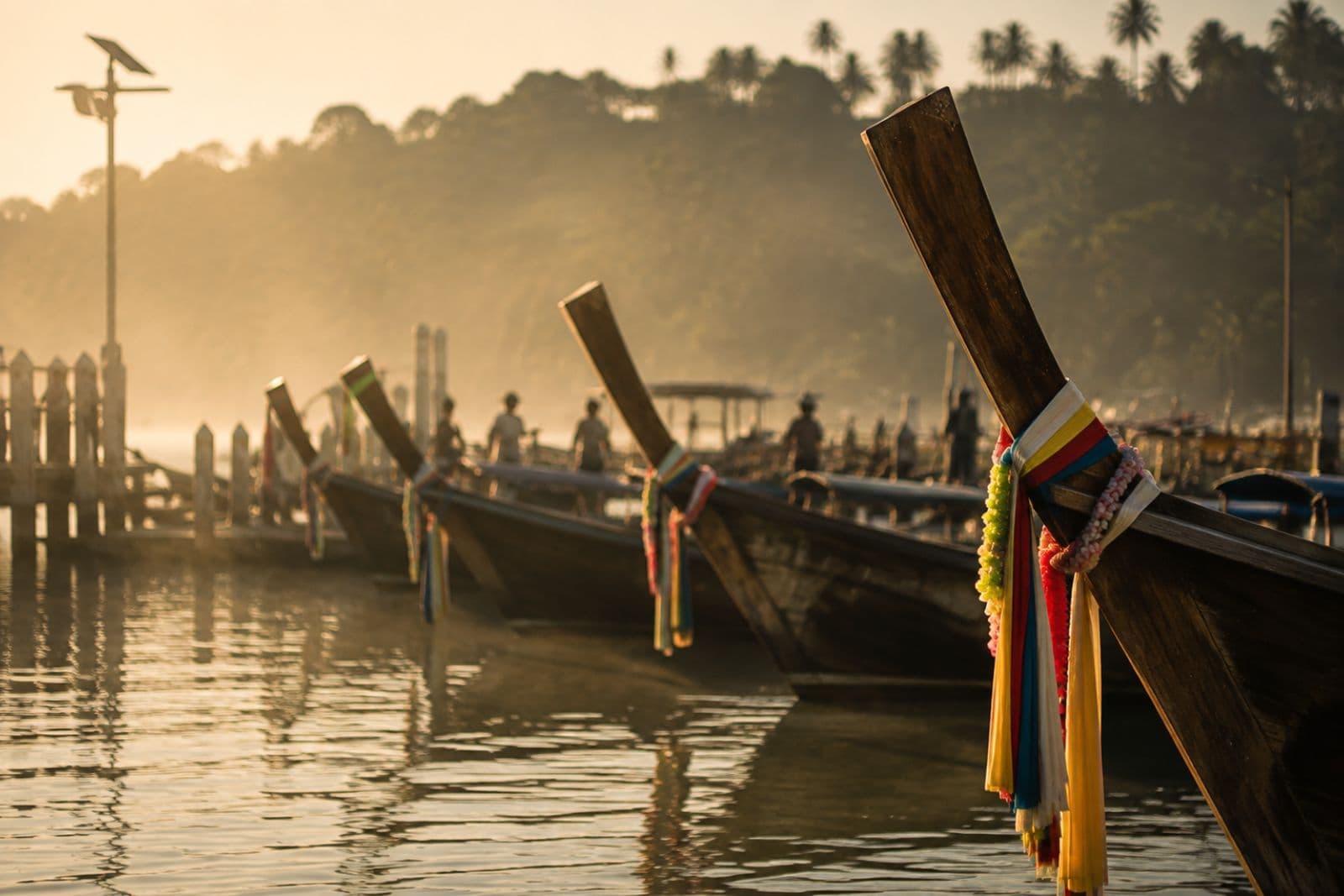
Section 7 tells you what to skip. This section tells you where to spend your energy. They work as a pair — one would be incomplete without the other.
Rather than a generic top-ten list, this section is organised by traveller type, matching the base structure from Section 1. Five types — families, couples, party animals, fitness and active, culture and food and slow travel. Most visitors are hybrids, so read the sections that fit, borrow from the ones that don’t, and ignore anything that doesn’t apply.
The activities named here are examples of what each traveller type tends to enjoy on Phuket — not a mandatory list. The Phuket Community directory has vetted partners in each category who can help you actually book any of these.
Families
Family-friendly beach day. Kata, Karon, Nai Harn or Kamala — pack a beach umbrella and a picnic, hire sunbeds from one of the vendors, plan around the heat (early morning or late afternoon). A proper beach day with children is one of the reasons families come to Phuket at all.
Water park visit. Phuket has a couple of properly designed water parks with slides, wave pools and family zones — a full-day activity for children and a real break from beach days. Season and opening hours vary; check before you drive out.
Ethical elephant sanctuary. A morning at a genuine rescue sanctuary — no riding, no bathing photos, no chains. Children get to see elephants at close range in an ethical context. Section 7 explains how to tell the ethical operators from the marketing.
Boat trip with kids. Coral Island (the shortest boat ride, easiest with young children), Racha Yai (a slightly longer day, quieter waters) or a private half-day charter to a specific island — usually a better experience with kids than a group Phi Phi trip.
Aquarium visit. Phuket has an aquarium and marine science centre at Cape Panwa — smaller than the big-city aquariums but a solid rainy-day activity or heat-relief morning.
Sunday walking street market. Phuket Old Town’s Sunday-only walking street (Thalang Road area) is the concentrated street food and stalls experience — visually engaging for children, easy to graze through, safe walking environment.
Couples
Sunset at Promthep Cape. The southern tip of the island — public viewpoint, no ticket needed, arrive an hour before sunset for the best light. Not a private experience (there’s always a crowd) but a memorable one.
Beach club sunset session. A late-afternoon into evening at one of the west-coast beach clubs — Bang Tao, Kamala, Surin — with cocktails and dinner as the day drops. Section 5’s beach club paragraph covers the mechanics.
Cooking class together. A half-day cooking class with a respected operator — market visit, hands-on cook of 3-4 Thai dishes, meal at the end. One of the more memorable couple experiences on the island because it’s shared rather than passive.
Romantic dinner at a heritage restaurant. A dinner at one of the destination restaurants in a heritage mansion — the setting is as much of the experience as the food. Fine-dining budget territory, book in advance.
Established dinner-show venue. Old Town has a handful of dinner-show venues with a genuine reputation for taking care of their cast. Section 7 covers how to tell those from the exploitative operations elsewhere.
Old Town wandering ending in a cocktail bar. A slow evening — walk the heritage streets around sunset, dinner at a Southern Thai restaurant, cocktails at one of the small independent bars. Doesn’t require booking, doesn’t require rushing.
Party animals
Nightclub night on Bangla Road. The largest club on the island (and one of the largest in Thailand) anchors Bangla Road — big rooms, international DJ programme, full production. Section 7 covers the honest pacing note; one full night is a valid experience, three in a row usually isn’t.
Beach club Sunday session. Sundays are the peak day at the west-coast beach clubs — DJ programming, dressed crowd, sunbeds booked out. Bang Tao is the epicentre. Book ahead in high season.
Muay Thai fight night. Weekend cards at established stadiums are the classic party-adjacent activity — a couple of hours, more distinctive than another club night, and a genuine local experience rather than a tourist show.
Old Town cocktail bar crawl. Three or four of Old Town’s independent cocktail bars in a night — earlier in the evening than Bangla Road, smaller rooms, better drinks. A good pre-Bangla warm-up if that’s your night’s structure.
Pool party or event day. Beach club and pool party events happen through high season — check the current programme at the individual venues, or use the Phuket Community events feed for a rolling list.
Fitness and active
Muay Thai training block. A week or a fortnight at an established camp — twice-daily sessions, coaching, community. The Muay Thai and Martial Arts category in the directory has the vetted camps.
CrossFit or functional gym drop-in. Almost every serious CrossFit box in Phuket takes drop-ins with no advance booking — walk in, pay the class fee, train. The established boxes cluster in Chalong and Rawai.
Yoga class or retreat. Phuket has a real yoga scene — vinyasa studios, dedicated retreat centres, and yoga-adjacent wellness operators. Drop-in classes are widely available across the south and the west coast.
Dive certification course. PADI or SSI Open Water certification takes 3-4 days, runs year-round in Phuket, and works well as the anchor of an active week. The Dive and Water Sports category in the directory has the vetted schools.
Sunrise beach run. Nai Harn, Layan, Nai Yang and Rawai’s seawall are all good running spots at first light — before the heat and before the traffic. A serious morning routine for the active-week crowd.
Hike to Big Buddha. A moderate walk up to the Big Buddha viewpoint (rather than the tour bus drive-up) turns a photo stop into a proper morning activity — the view is genuinely worth it, and the walk sets up a good breakfast afterwards.
Culture, food and slow travel
Old Town walking tour. A guided or self-guided walk through Phuket Town’s heritage core — Sino-Portuguese architecture, the story of the tin-mining boom, the streetscape context that a bus tour won’t give you. Half a day.
Cooking class. Equally relevant here as for couples — a serious food-focused visit is not complete without one.
Southern Thai food deep-dive. Book at three or four of the destination Southern Thai restaurants across the week. Each will introduce a different dish or preparation you haven’t seen before.
Wat Chalong temple. Phuket’s most important Buddhist temple — an early morning visit (before the tour buses) is a different experience to a mid-morning one. Dress respectfully — no shorts or bare shoulders.
Big Buddha view. Worth the drive for the view, not the shopping around it. Same dress-code advice as for Wat Chalong.
Sunday walking market. Also relevant here for the food-focused traveller. Weekday alternatives in some other areas.
Hybrid note
Most visitors don’t fit cleanly into one type — a couple with kids picks up ideas from three lists, a fitness traveller who also wants a dinner-show night crosses over, a party animal who books a Muay Thai session in the morning is doing both worlds. The types are a lens for choosing, not a straitjacket. Read what fits, borrow what looks interesting, ignore what doesn’t apply.
What to skip
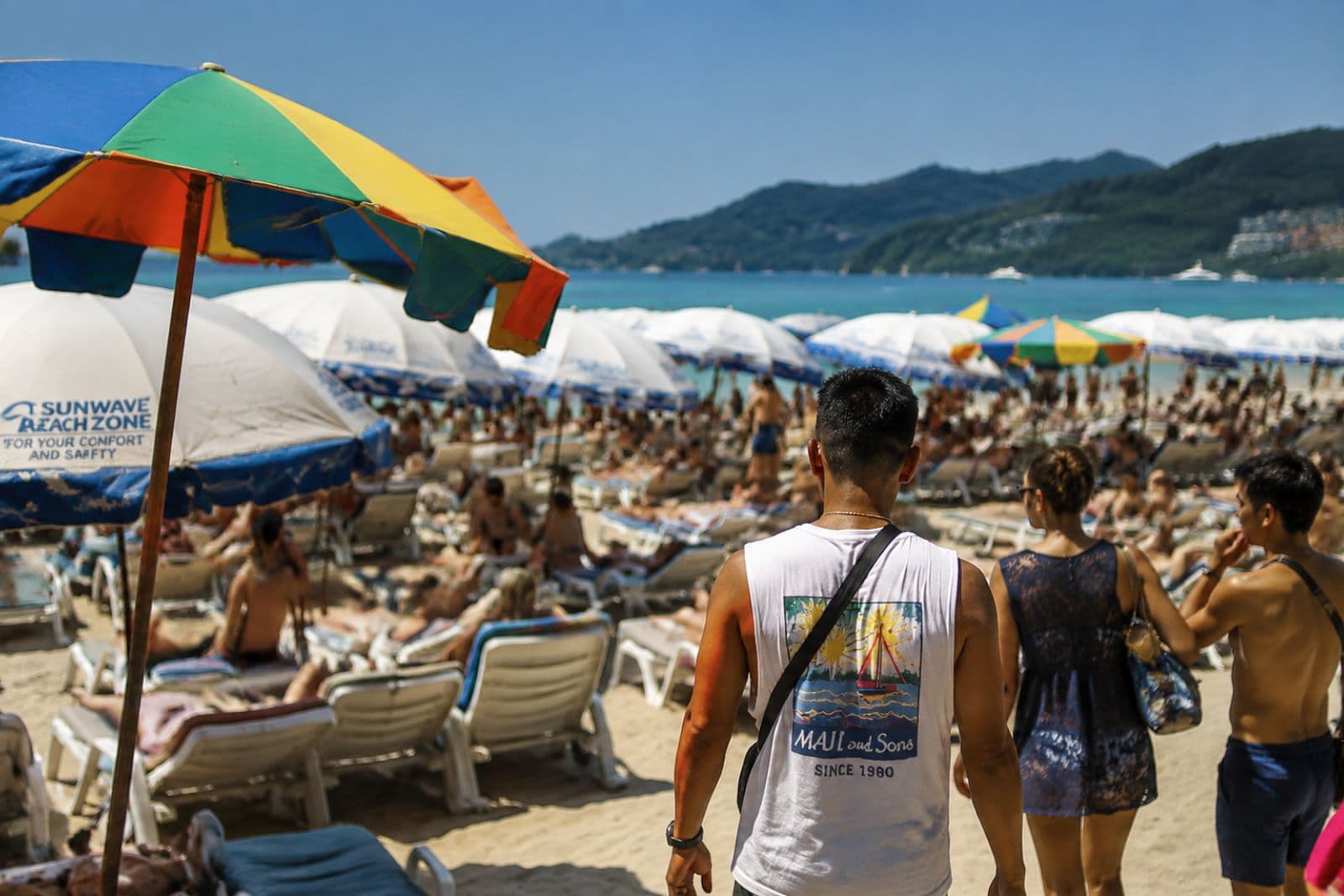
This is the editorial position of the whole guide in miniature. Phuket Community’s commercial incentive is with long-term partner businesses in our vetted directory, not with tourism aggregators or one-off tour bookings. That editorial independence is what lets this section exist at all — most Phuket guides can’t write it, because their revenue depends on the operators they’d otherwise have to be honest about.
Each entry below is either a) something to skip entirely, or b) something to do differently. Every item is paired with either an alternative or a mitigation. Nothing here is a blanket rule — some carve-outs apply, and where they do we’ve named them.
The phrase “tourist tax” runs through this section. That’s the concept most of this section is really about — the systemic mark-up applied to visitors who don’t know the local price. Sometimes the mark-up is worth paying for the convenience. More often it isn’t.
Elephant riding
Do not do it. Ethical elephant sanctuaries — real ones — do not offer rides. Their model is retirement, rescue and rehabilitation for elephants who’ve spent their lives in the trekking or logging industry. If a place offers riding or bathing photo opportunities, it isn’t a sanctuary in any meaningful sense — regardless of what its marketing says. If you want to see elephants, go to a genuine sanctuary. The experience is different, better, and honest.
Tiger Kingdom and big-cat photo operations
Welfare concerns with commercial big-cat photo operations in Thailand are well-documented — sedation practices, undersized enclosures, breeding-for-photos models. Skip.
Patong tuk-tuk and taxi mafia
Know what they are, don’t be surprised by them, and negotiate the price before you get in. This isn’t a “never use them” — sometimes in Patong they’re the practical option, particularly late at night. But Grab and Bolt operate in most of the island (Patong included, though sometimes with a wait), and the app price is almost always cheaper. The ride to avoid is the unnegotiated one, not necessarily the tuk-tuk itself.
Airport taxi
Same principle. Not every airport driver is the mafia — the airport is a working transport hub with many honest drivers. But pre-arranging a licensed transfer for your first arrival makes the day much easier, particularly if you’re arriving late or with family in tow. On the return trip, once you know how the ropes work, Grab or Bolt is usually fine.
Hotel spa massage at hotel prices
The neighbourhood massage shop across the road offers a one-hour Thai massage for roughly a quarter of what the hotel spa charges — for the same treatment, often from a therapist who worked at that hotel until she opened her own shop. The mark-up buys convenience, nothing else.
Exception — the destination-spa resorts. Trisara, Sri Panwa, Amanpuri, Six Senses Yao Noi and a handful of others have properly designed spa programmes where the mark-up buys a real experience: the setting, the treatment, the ritual. Different category to an average four-star hotel spa charging premium prices for a standard massage.
Bangla Road at scale
One visit to Bangla Road is a valid cultural experience — the scale, the noise, the chaos of the strip is genuinely singular. Three consecutive nights of it isn’t a holiday; it’s a decision.
Exception — if you’re a party animal here specifically for the nightlife (see Section 6), Bangla Road may be exactly where you feel at home. The guide isn’t in the business of judging that. Just be honest with yourself about which visitor you are.
Some cabaret shows exploit their performers
Established shows with a long track record, transparent ticketing and a professional cast sit at one end of the industry. Beach-side stalls flogging discounted tickets to underground venues sit at the other. If you want to see a cabaret show, choose an established venue with a public reputation, not the cheapest ticket someone sold you on the beach.
Fake watches, fake brands and market bargains that aren’t
Everyone knows they’re fake. Often, so does the vendor. But the price still comes out at “fake bargain” rather than fake. Beyond the value question, trading in counterfeit goods is illegal in Thailand. You probably won’t be arrested. You may well have them confiscated at Bangkok customs on the way home. Skip.
Hidden beach tours
Anything advertised as “secret” or “hidden” on a tour board is neither. The interesting less-crowded beaches on Phuket are the ones you find by walking away from the tour buses, not by paying an operator to take you to one.
Renting a scooter as a tourist with no motorbike experience
The Phuket scooter safety numbers are what they are — the injury and fatality rates for tourists who rent bikes without training are real, and they are the single biggest risk on the island. If you’re going to rent, use a licensed operator with proper insurance and clear support — see our vetted rental providers in the directory. Wear a helmet. Understand that your travel insurance most likely doesn’t cover motorbike accidents unless you hold a motorcycle-endorsed licence.
If you’ve never ridden a scooter before, this is not the trip to learn. The songthaew and Grab combination covers most of the ground.
The “cram every stop into one day” boat trip
Phi Phi + Bamboo Island + Maya Bay + snorkel + lunch is the standard package because it maximises operator revenue, not your experience. You end up spending six hours on a boat, thirty minutes at each stop, and the day feels rushed rather than restorative. Pick a boat trip based on what you actually want — dive-focused, snorkel-focused, sunset, private, chill — and book that, not the all-inclusive tour.
Sunset viewpoint queues at Big Buddha and similar tour bus stops
The famous viewpoints get famous for a reason — but they also get overrun during peak sunset hours in high season. Promthep Cape sunsets can be lovely if you arrive in low season or on a weekday; they’re chaotic on Saturdays in December. The alternative is a west-coast beach club at sunset, or one of the less-marketed viewpoints on the way south from Kata to Nai Harn.
Overpaying for basic package upsells
Transfers, meals, drinks and airport pickup in tour packages are marked up significantly. Where you can, book the activity and the transport separately — the price difference is usually noticeable.
The alternative to the tourist economy on Phuket is the actual island — the resident-recommended businesses, the neighbourhood restaurants, the trained coaches, the honest boat operators, the licensed drivers. Every partner in the Phuket Community directory has been vetted for genuine quality and honest pricing. This section isn’t a warning; it’s an invitation to spend your week on the good stuff instead.
Getting around and practicalities
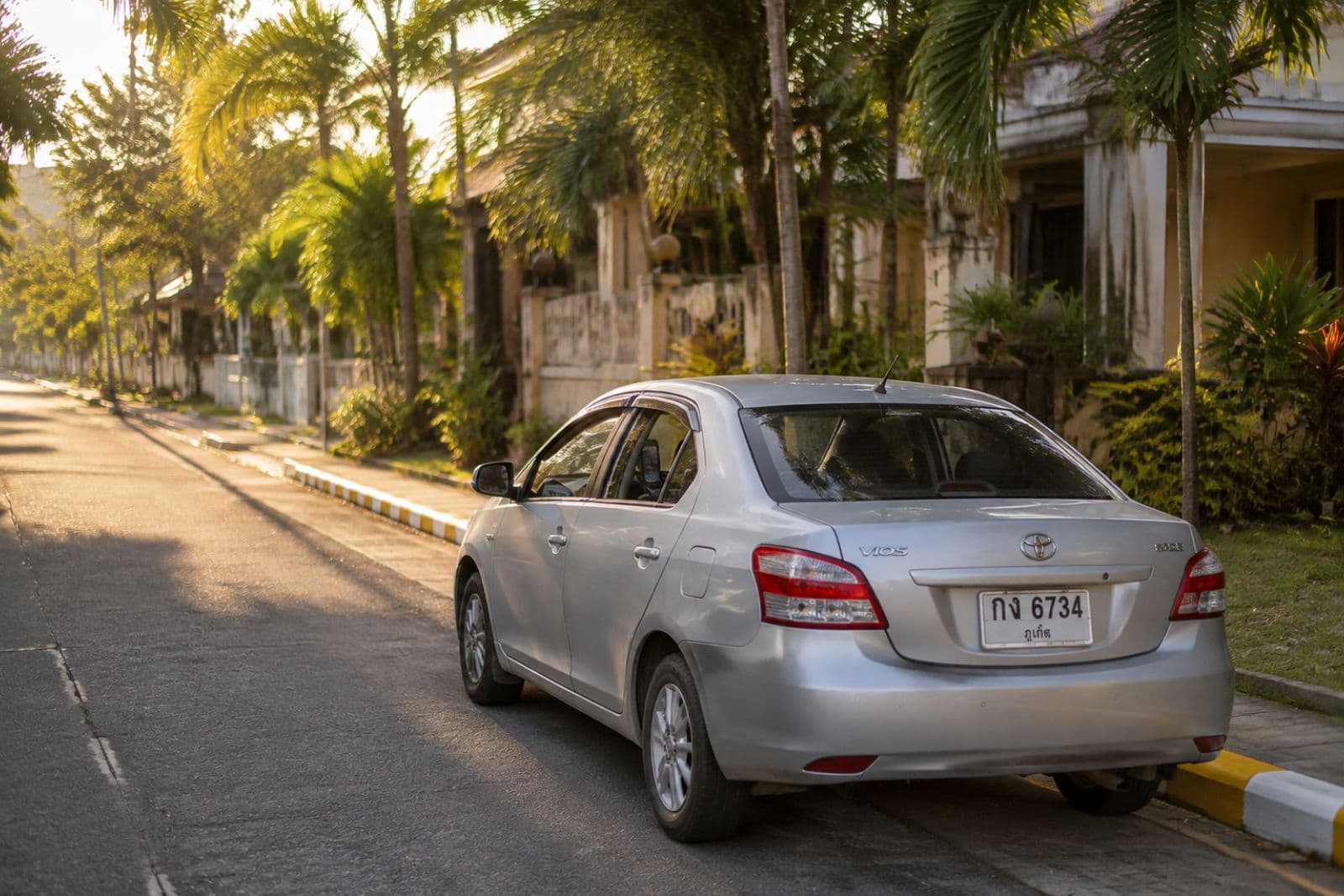
The utility section. Practical, short, no fluff. Cross-references Section 2 for pre-arrival admin (SIM, cash, insurance, visa) and Section 7 for the scooter safety context. Everything you need for the day-to-day of a Phuket week that isn’t a beach or a dinner.
Grab and Bolt
Both rideshare apps work across most of Phuket. Grab has the wider coverage; Bolt is often cheaper. Both accept international cards or QR payments. Rides across most reasonable distances (Rawai to Chalong, Kata to Karon, Bang Tao to Cherng Talay) run ฿100-฿250. Longer rides — say Rawai to Bang Tao — run ฿400-฿700. Waiting times vary by area: shorter in the busy areas, longer in the quieter south and inland zones.
Songthaew
The blue trucks are Phuket’s local public transport — fixed routes rather than door-to-door, low fixed price (฿20-฿40 per person for most trips within an area). Main routes run between Phuket Town and the main beaches (Patong, Kata, Karon), and along the west coast. Not always easy to figure out as a first-time visitor, but the resident community uses them heavily. Ask any Thai person for directions and they’ll usually point you at the right route.
Private driver for the day
Booking a private driver for a full day of exploration is one of the more useful things a Phuket visitor can do — ฿2,500-฿4,500 for a full day (roughly 10 hours) with an English-speaking driver and a comfortable air-conditioned vehicle. Perfect for a temple day, a day exploring three or four less-connected areas, or a longer boat pier transfer with waiting time.
Motorbike taxis and tuk-tuks
In Patong and Kata, motorbike taxi drivers with orange vests and tuk-tuks are widely available. Prices are higher than Grab, so negotiate before getting in. Fine for a short trip; not the choice for a longer one.
Scooter and car rental
The scooter safety paragraph in Section 7 is the honest read. If you’ve decided to rent — either because you have real motorbike experience, or because you’re okay with the risk — use a licensed operator with proper insurance. Car rentals are widely available at Phuket airport and through several major operators — from around ฿800-฿1,500 per day for a small car, higher for larger vehicles. Long-term rental deals (7 days and up) are available for lower daily rates.
Cash and card
QR payment via SCB, Bangkok Bank and Kasikorn is accepted almost everywhere — restaurants, cafes, taxis, tour operators, most street food stalls. A small amount of cash (฿2,000-฿5,000 in mixed notes) covers markets, older stalls, and the occasional operator whose QR isn’t set up. ATMs charge foreign cards around ฿220 per withdrawal, so withdraw larger amounts less often.
SIM card
Covered in Section 2 — both True and AIS sell tourist plans at the airport arrivals hall. If you’re staying longer than 10 days, ask for a 30-day plan. Both networks give solid coverage across the island.
Emergency numbers
Tourist Police 1155. Medical emergencies 1669. Ambulance 1554. The main private hospitals used by the resident community are Bangkok Hospital Phuket in Phuket Town and Mission Hospital in Kathu — both offer international-standard care with English-speaking doctors. For serious cases, some patients are transferred to Bangkok, where the largest specialist hospitals are based. See the Healthcare and Clinics category in the directory for a fuller reference.
Weather awareness
Phuket’s high season runs November through April — dry, sunny, calm seas, everything open. Low season runs May through October — hotter mornings, afternoon rain most days, some boat trips paused, but lower prices and much smaller crowds. A “rainy day” in low season usually means a heavy afternoon rain that lasts one to three hours, then dries up. It doesn’t mean a UK-style all-day drizzle. Plan your outdoor activities for the morning during low season and you’ll rarely be caught out.
Take it with you
Enjoyed this? Get the PDF for later
A single email delivers the whole guide as a PDF. Read it on the plane, share it with a friend, come back to it when you need it.
Free · one email · unsubscribe anytime.
More from Phuket Community
Moving to Phuket
Everything a new resident needs to know about neighbourhoods, healthcare, transport and dining.
Read the guide